
This is a guest article written by Jean McLean, Director of Engagement at the Green Economy Coalition (GEC), a global movement for green and fair economies.
Results from the Green Economy Coalition’s latest Global Green Attitudes Survey reveal a loud and consistent demand: People around the world, want more radical and transformative government action – not just on the environment, but on the economic systems driving the climate and nature breakdown.
And they don’t just want small “green tweaks” either, they want economies reshaped to serve the people and the planet, not pollution and profit.
Despite today’s shaky politics, the survey, which polled over 10,000 people across 10 countries, is clear: support for climate action is strong across countries and income levels. What’s missing now isn’t public backing, its political courage.
A tougher political context, but public support for climate action hasn’t weakened
Compared to the same survey in 2024, the political and economic context has become even more challenging. Since our first wave of research, the cost-of-living crisis has continued to bite. Trump’s re-election has emboldened right-wing populists and their pro–fossil fuel agenda, while “green hushing” has crept into government, corporate, and even civil society spaces, with sustainability quietly reframed, deprioritised, or hidden.
Yet even in this climate of economic anxiety and political retrenchment, our survey found that the public has not turned away from environmental action. Instead, people increasingly recognise that today’s economic model is failing them as well as the planet — driving inequality, locking in pollution, and leaving households exposed to rising costs and environmental risk.
And crucially, the survey shows just how deep that support runs: 84% of people globally would choose stronger environmental protection even at the cost of slowed economic growth.
People want a real change in the system, not just a tweak
The polling reveals a powerful and consistent message: people want governments to lead a systemic economic transformation, not rely on voluntary action or individual sacrifice.
- 88% of people globally say governments should be doing more to combat climate change.
- 82% support prioritising public investment in clean energy, even when this requires significant government spending.
These are not abstract environmental preferences. They reflect a growing understanding that public investment, regulation, and economic planning are essential to building resilient, fair economies: ones that deliver decent jobs, affordable energy, and healthy environments.
And yet, only 42% of people believe their government is taking more action now than last year to protect the environment. The result is a widening credibility gap between what people know is needed and what governments are prepared to do.
Reclaiming economies means governments stepping up for the climate
Crucially, the survey shows that people do not see the green transition as something households can, or should, carry alone. The biggest barrier to more sustainable choices is not apathy or unwillingness, but lack of government support, cited by 52% of respondents globally.
This is especially pronounced in lower-income countries, where citizens are often most exposed to environmental harm while having the least influence over global economic rules. In countries such as Nigeria, Turkey, and South Africa, over 60% identify government inaction as the main obstacle.
When asked what would help, people pointed to:
- Better laws and stronger regulation
- Increased funding for environmental programmes
- Support for green jobs and environmentally responsible businesses
In other words, people are asking governments to reclaim their role in shaping the economy, rather than outsourcing responsibility to individuals and markets that reward pollution and short-term profit.
Trust in leaders is collapsing, but people still want ambitious action
Trust in political leadership remains worryingly low. Just 39% of people globally trust political leaders to make the right decisions for a sustainable future. But this collapse in trust has not dampened ambition.
Instead, people are calling for bold reforms that challenge business-as-usual: stricter regulation of pollution, stronger accountability for corporations, and public investment to steer economies towards long-term wellbeing, even if this means economic trade-offs in the short term.
This reflects a growing public understanding that an economy designed around endless growth, extraction, and inequality is neither sustainable nor desirable. People are ready for a new direction — one that measures success by health, resilience, and shared prosperity, not just GDP.
The public has spoken, now it’s time our governments delivered
Taken together, the findings leave no room for doubt. Governments already have a clear public mandate to act on climate, on nature, and on the economy itself.
Reclaiming our economies means:
-
- putting people and the planet back at the centre of decision-making.
- using public policy to reward care, restoration, and long-term value and to hold polluters to account.
- moving beyond rhetoric, towards real investment, regulation, and reform.
People are already doing their part. They are ready for change. The question is whether political leaders are willing to listen, and to finally use the tools they have to build economies that work for everyone.
What do we want? Economies that serve people and the planet. When do we want them? Now.
Related blogs
News, stories, and insights from the global climate movement.
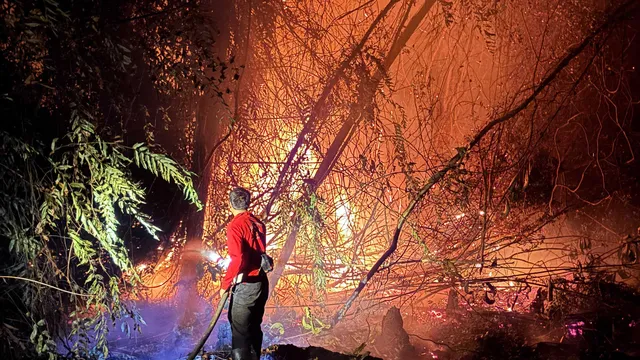
Indonesia’s wildfire crisis cannot be business as usual
Every wildfire season, I watch the smoke arrive. This year, the fires have gotten worse.
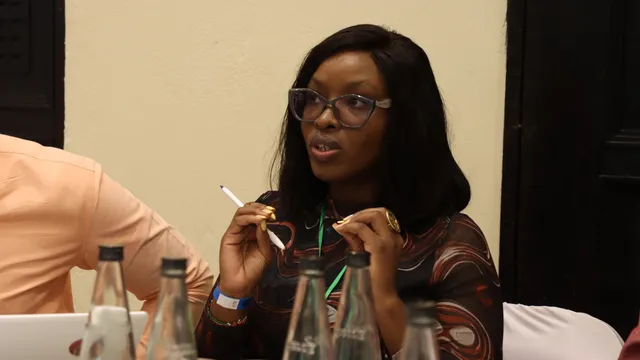
African Symposium on Climate Reparations
Africa is on the frontlines of a climate crisis it did not create. True climate action requires more than promises - it demands accountability, equity, and repair.
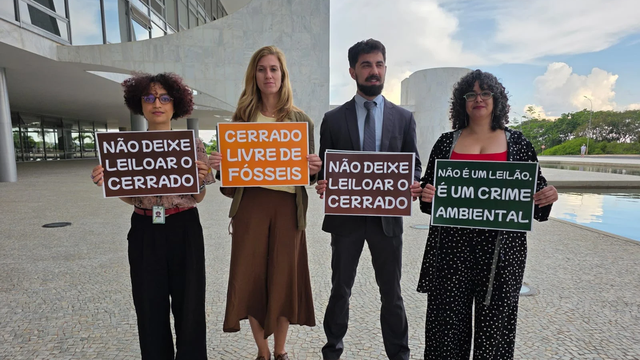
The Cerrado Is Not for Sale
Explore the upcoming gas auction in Brazil and its implications for Indigenous lands and the environment in Maranhão.
