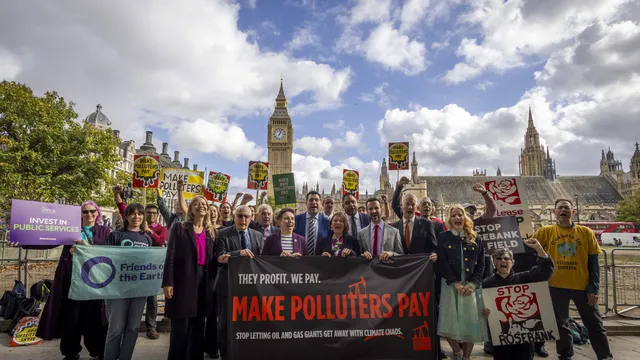
350.org welcomes the announcement of a two-week ceasefire between the United States and Iran as a first step, but raises concerns over its fragility and limited scope, which leaves the risk of persistently high fossil fuel prices.
‘Fossilflation’ – or inflation caused by volatile and rising prices of oil and gas – is still likely to continue, due to the fragility of the ceasefire arrangement and extensively damaged fossil fuel infrastructure. 350.org said that governments must use this opportunity to double down on efforts to protect people from oil and price shocks and accelerate the shift away from fossil fuels.
350.org has calculated that price spikes due to the Iran war have cost consumers and businesses an additional $104.2–$111.6 billion in the first month of the war alone. 350.org calls on governments to tax the windfall profits of fossil fuel companies and to use revenues to directly support consumers and ramp up the deployment of renewable energy.
Andreas Sieber, 350.org Head of Political Strategy said:
“Even if the Strait of Hormuz reopens and the ceasefire holds, oil and gas prices will stay above pre-war levels and consumers will pay. Volatility remains high, and supply will stay tight due to infrastructure damage and inventory rebuilding. LNG markets are still exposed, with few alternatives to Hormuz.
This will deepen energy poverty, hunger and inequality. Protecting people means prioritising resilience and affordability now. The ceasefire must become permanent and extend across the whole region. This is not a temporary shock but a structural crisis. The only lasting answer is to replace volatile fossil fuels with homegrown, affordable renewable energy.”
Media Contact:
Ilang-Ilang Quijano, 350.org Media Campaigner, [email protected], +639175810934
Kim Bryan, 350.org Media Strategy and Relations Manager, [email protected], +447770881503
Related press releases
US inflation rises to 3.7% as energy price shock hits household budgets
Climate damage from Indonesia’s wildfires needs cooperation