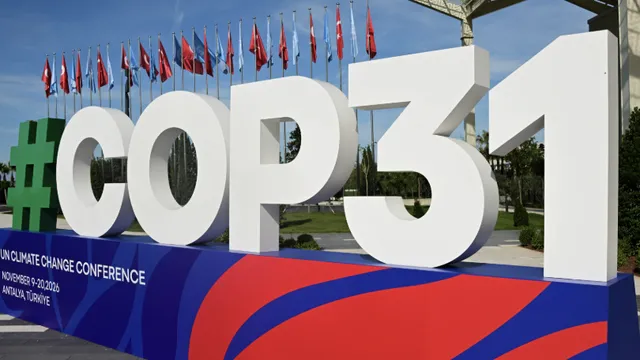
ANTALYA, TÜRKİYE: The COP31 Presidencies have published their first compilation of elements which could feature in a possible Cover Decision, titled “Summary of Reflections”. Drawing on Parties’ initial interventions, it lists key issues on the table: fossil fuel transition global roadmap, electrification, overshoot of 1.5C, and climate finance, including new proposals to track adaptation commitments. The text sets the stage for some of COP31's central political battles. Today, Parties will respond to the text, providing an indication of which elements will gain traction or face resistance before the first draft text is tabled early next week and negotiated by ministers.
Key elements include:
- A 35 by 35 electrification goal that mentions, but does not directly connect, the need to accelerate renewables and instead refers to clean sources, which opens the door to nuclear. However, it does not connect to the need to phase out fossil fuels.
- Welcoming the COP30 Presidency Roadmaps on Transitioning Away from Fossil Fuels (TAFF) and Halting and Reversing Deforestation and Forest Degradation. It also captures many Parties' demand for a path forward on the roadmaps towards the second Global Stocktake. Not only welcoming but unpacking the process forward within and outside the cover decision will be a critical test for COP31.
- Responding to overshoot of 1.5 and welcoming the International Court of Justice Advisory Opinion on Climate Change.
- Besides affirmation of existing finance goals, the text proposes to close much-needed gaps for tracking adaptation finance, including a baseline and milestones for tripling adaptation finance by 2035.
Fanny Petitbon, Policy expert, 350.org said:
“The first outline for a COP31 Cover Decision puts some of the summit’s central political fights on the table. Amid the biggest fossil fuel crisis in history, settling for the lowest common denominator would be a failure of leadership. Cutting fossil fuel dependence and scaling up climate finance, including by making big polluters foot part of the bill, are two make-or-break issues for a successful COP outcome. Baselines and milestones for tripling adaptation finance may sound like accounting details, but they are crucial for rebuilding trust and for showing frontline communities that developed nations will not leave them to fend for themselves. Belém drew the map to move off oil, gas and coal. Antalya must now set countries on the road, with the next Global Stocktake as the destination.
That will take the full diplomatic weight, creativity and courage of both presidencies. The convenient option would be to drop each contested proposal at the first objection. Türkiye and Australia must resist that temptation. Driving the transition away from fossil fuels forward is their responsibility and the true test of their leadership.”
ENDS
Related press releases
PEOPLE’S CLIMATE MARCH TO BRING GLOBAL CALL FOR CLIMATE JUSTICE TO THE STREETS OF ANTALYA
COP31: Australia and Türkiye must break their silence as momentum builds for fossil fuel transition