

ANTALYA, TÜRKIYE – The latest COP31 cover text draft, published at around 4 am by the Turkish and Australian presidencies, fails once again to mention fossil fuels, despite repeated calls from countries across negotiating blocs over the past 48 hours to build on the commitment made in Dubai to transition away from coal, oil and gas and the momentum gained at COP30.
The draft keeps the goal to scale up electrification by 2035 (35x35) in paragraph 40(d). But it refers only to "clean energy", leaving the door wide open to meeting new electricity demand with nuclear, gas or even other fossil fuels, rather than renewables. There is also no commitment to any finance to support electrification in developing countries, or indeed any firm climate finance commitments at all. And given the urgent need for adaptation finance for countries hit hardest by the climate crisis, the new text still has no baseline to measure the tripling of adaptation finance, just another process to assess the options.
When it comes to carbon capture, utilization and storage (CCUS), the new draft is a step forward as it drops the specific target included in the previous version. But paragraph 40(h) still calls for "accelerating Carbon Capture, Utilization and Storage deployment with an aim to achieve gigatonne scale globally by 2035 as a collective global aspiration."
Carbon capture is not a climate solution. It is a lifeline for the fossil fuel industry, and a costly diversion of public and private money away from proven, affordable renewable energy. In these final hours of the negotiations, insisting on keeping carbon capture in the cover decision is a blatant refusal to listen to what science and people all over the world have been demanding: the only real answer to the climate crisis is a just transition away from coal, oil and gas.
Sara Shaw, Campaigns and Networks Director at 350.org, said:
"Carbon capture is one of the biggest scams of the overshoot era, and our leaders are on the verge of falling for it. Here's the ugly truth buried in this text: nearly 80% of carbon capture capacity is used to pump more oil out of the ground. The fossil fuel industry IS the carbon capture industry.
"Country after country has called on the COP31 presidencies to build on the Dubai commitment to transition away from fossil fuels, and they have looked the other way. We cannot let unproven technologies distract from what science demands: a fast, fair and funded phase-out of fossil fuels. This text isn't a climate plan. It's a licence to keep polluting."
ENDS
Notes to editor:
- Most carbon capture capacity today is used to produce more oil. Oil Change International's analysis found that 79% of operating carbon capture capacity worldwide sends captured CO2 to Enhanced Oil Recovery, where it is injected into ageing oil wells to extract more oil.
- Relying on carbon capture is far more expensive than clean energy. A report by Oxford University's Smith School of Enterprise and the Environment found that heavy dependence on carbon capture to reach net zero by 2050 would be "highly economically damaging," costing at least $30 trillion more than a pathway based primarily on renewable energy, energy efficiency and electrification.
Related press releases

COP31 near-final texts an ‘outrage’ as fossil fuel transition eliminated
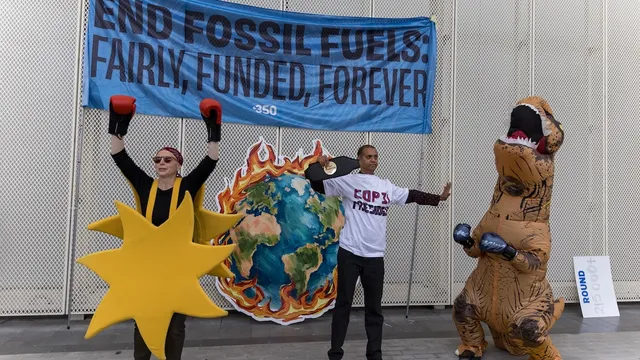
COP31: 200,000+ people demand Australia and Türkiye deliver action to phase out fossil fuels
