
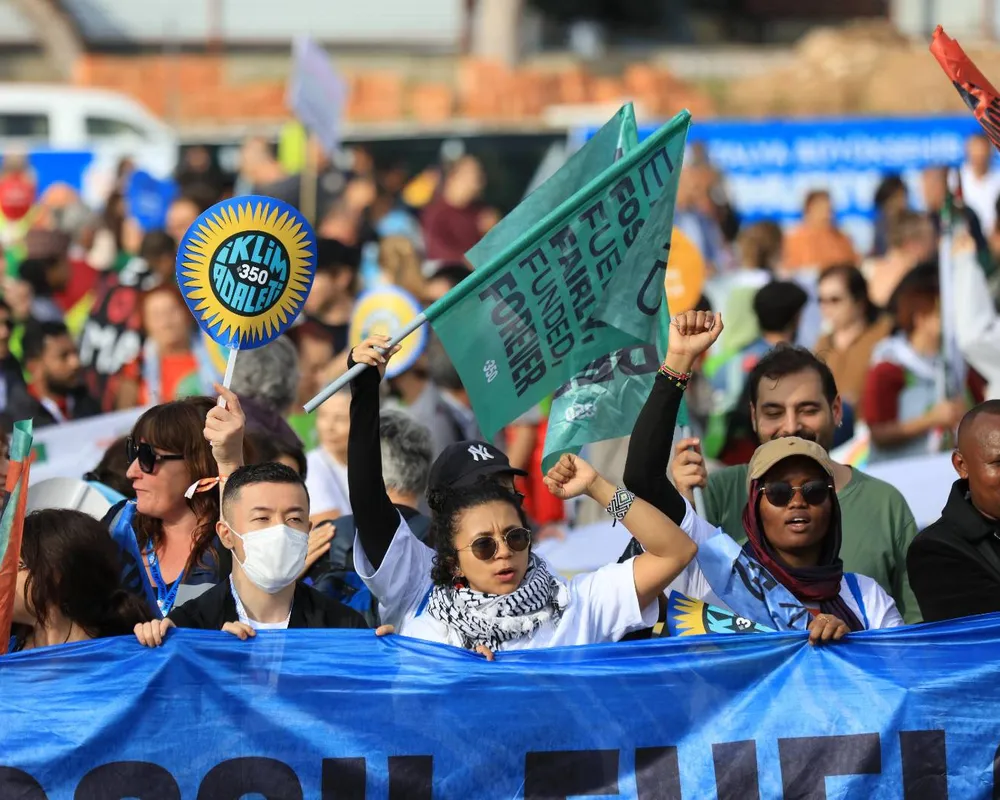
The UN Climate Talks (COP31) opened in Antalya, Türkiye, on 9 November. Our team has been there all week inside the negotiation rooms and alongside the talks at many different events. On Saturday, they were out on the streets with more than 10,000 people. Here's how the first week went, and what comes next.
Why this COP matters
Türkiye is hosting COP31 this year and Australia is leading the negotiations. The talks run until 20 November (at least!).
They opened at the end of a brutal year. We've seen deadly heatwaves in Europe and North America, floods in Nepal and wildfires in Indonesia and the Amazon. Oil and gas price shocks have shown, again, how exposed we all are when our energy depends on fossil fuels. And while people pay, the industry profits: BP, Chevron, ExxonMobil, Shell and TotalEnergies made a combined $56 billion in just 3 months.
Ten years after the Paris Agreement, the world is on track to pass 1.5°C. How far past it, and for how long, is still ours to decide. Every fraction of a degree matters, and so does every summit.
So we went to Antalya with four asks:
- Governments should agree to a fair, planned exit from coal, oil and gas, with real deadlines.
- Fossil fuel companies should pay their share through lasting taxes on their profits.
- The new push for electrification should be based on wind and solar, so that switching to electricity actually cuts fossil fuel use.
- And rich countries and big polluters need to provide the money and support that poorer countries and frontline communities need to cope and to make the switch.
A first win on day one
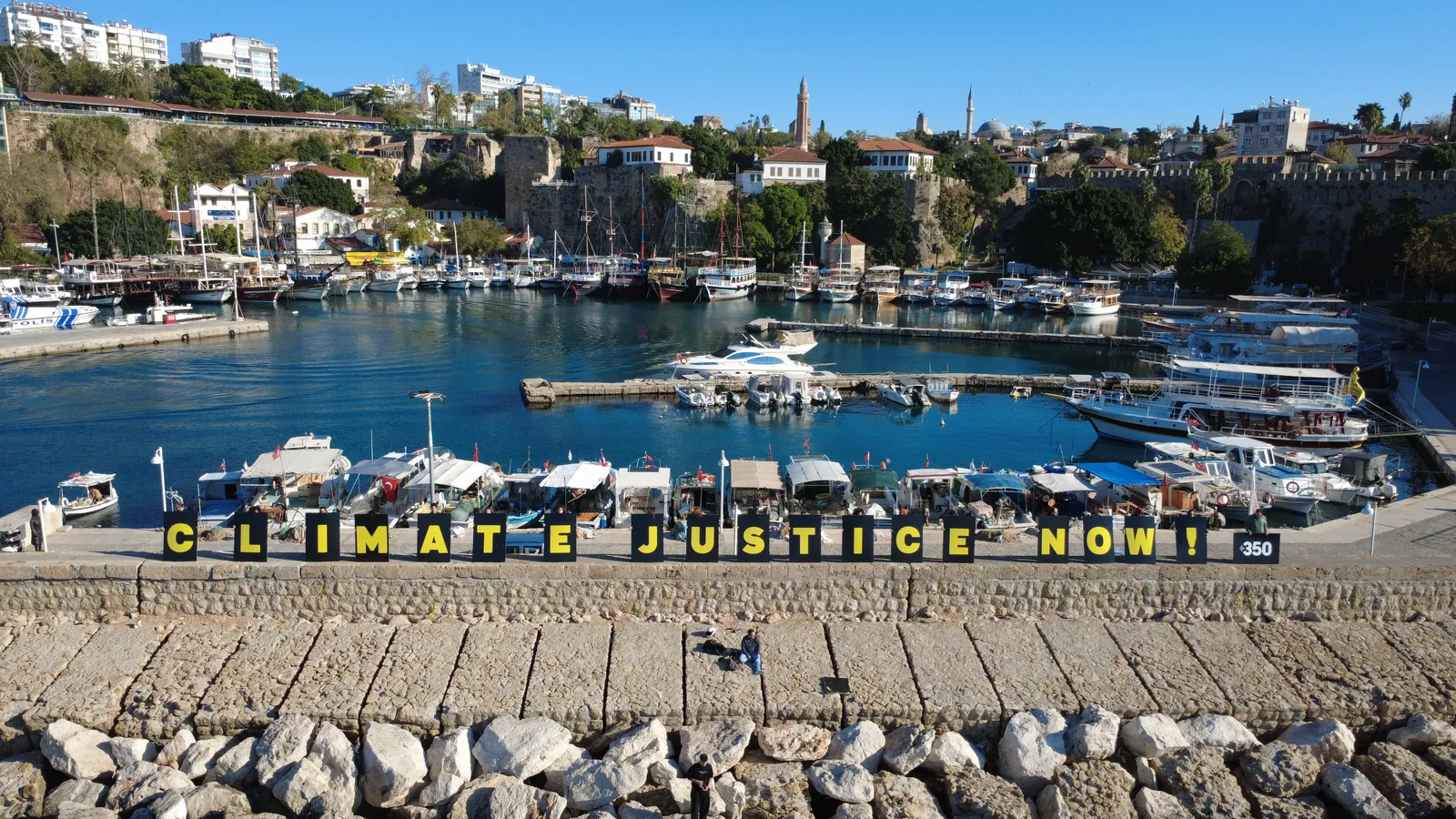
The first fight came before the talks had properly started. Rich countries pushed back against putting money for poorer countries on the official agenda. They lost. It's now on the table, so the promises made in past years can be pinned down (though tripling the money to help countries adapt to climate impacts didn't make it onto the agenda, and we're still pushing on that).
Our East Africa team lead, Rukiya, also went live on the BBC that day, talking about the millions of people being forced from their homes by climate impacts and what COP31 needs to do about it.
Energy Day: at the gates and in the room
On 10 November, as Energy Day began, our campaigners joined partners from across the movement outside the entrance to the official negotiating zone. The message to governments was simple: commit to a fast and fair exit from fossil fuels, stop approving new coal, oil and gas projects, and make the biggest polluters pay.
Later that day we hosted an event on electricity and who gets it. Across much of the Global South, people still have less affordable electricity than they need for a modern life. Interested in the topic? Read more here too.
The COP31 hosts also launched a new coalition called Electrify Now, aiming to raise over $1.2 billion for clean electricity projects in emerging and developing economies. We see switching to electricity and moving off fossil fuels as two sides of the same coin, so we welcomed it. Now we want to make sure the power comes from renewables, stays affordable and reaches the people who need it most.
One lighter moment: every evening the Climate Action Network hands out a Fossil of the Day "award" to countries holding things back. On Energy Day it went to nine countries at once, including Canada, Japan and most of the EU, for not bothering to send their heads of state.
World leaders arrive, and the pressure builds
Days three and four belonged to presidents and prime ministers. UN Secretary-General António Guterres was in top form. "Ending fossil fuels cannot be a taboo," he told one session. In his main speech he went further: "Fossil fuels must go the way of the dinosaurs." Brazil's President Lula urged every country to commit to plans for moving off fossil fuels, and Finland published its own national plan.
This matters because there's real momentum behind it. At last year's talks in Belém, Brazil, countries started work on roadmaps (detailed national plans) for moving away from fossil fuels. In April, 57 countries met in Santa Marta, Colombia, for the first ever conference on doing exactly that. And in Antalya this week, groups representing at least 73 countries called for COP31 to push that work forward. Leaders from 10 countries, including the UK, Norway and Finland, raised it in their speeches.
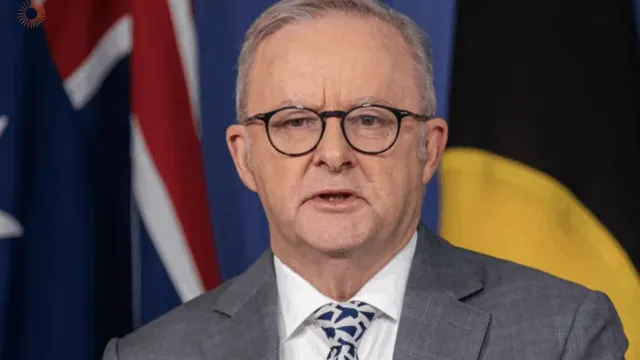
So you'd expect the two governments running COP31 to grab that support with both hands. So far, they haven't. Neither Türkiye nor Australia has a date to stop burning coal, and they've been deepening their coal trade with each other. Türkiye says it's open to the roadmap idea but hasn't said how it would take it forward. Australian Prime Minister Anthony Albanese gave his big COP31 speech without mentioning fossil fuels once, while his government is reportedly about to approve a huge coal mine expansion.
"Australia cannot call itself a climate leader while staying silent on the coal, oil and gas driving this crisis." - Fenton Lutunatabua, Pacific and Caribbean Programme Lead, 350.org
So we've launched an open letter to Albanese asking him to use Australia's role at COP31 to lead on a fair, funded move away from fossil fuels, starting with a deadline to phase out coal at home. The Pacific Climate Warriors recorded a video asking people to sign it.
Here's what we want from the hosts. Brazil took the roadmap work forward after it ran COP30. Türkiye and Australia should do the same: commit to carrying it on after Antalya, so it feeds into the next big UN review of climate progress in 2028. A line in the final text would be nice. A real plan to keep the work going would be much better, because progress can't only happen once a year at a COP. From now on, every meeting matters.
Calling out conflicts of interest
Indonesia's climate envoy, Hashim Djojohadikusumo, addressed world leaders on 12 November. He's also the brother of Indonesia's President Prabowo Subianto, he has business interests in fossil fuels, and one of his companies recently won an auction for a new oil and gas block. Our Indonesia team, alongside Indonesian civil society, is calling on him to resign.
Make polluters pay
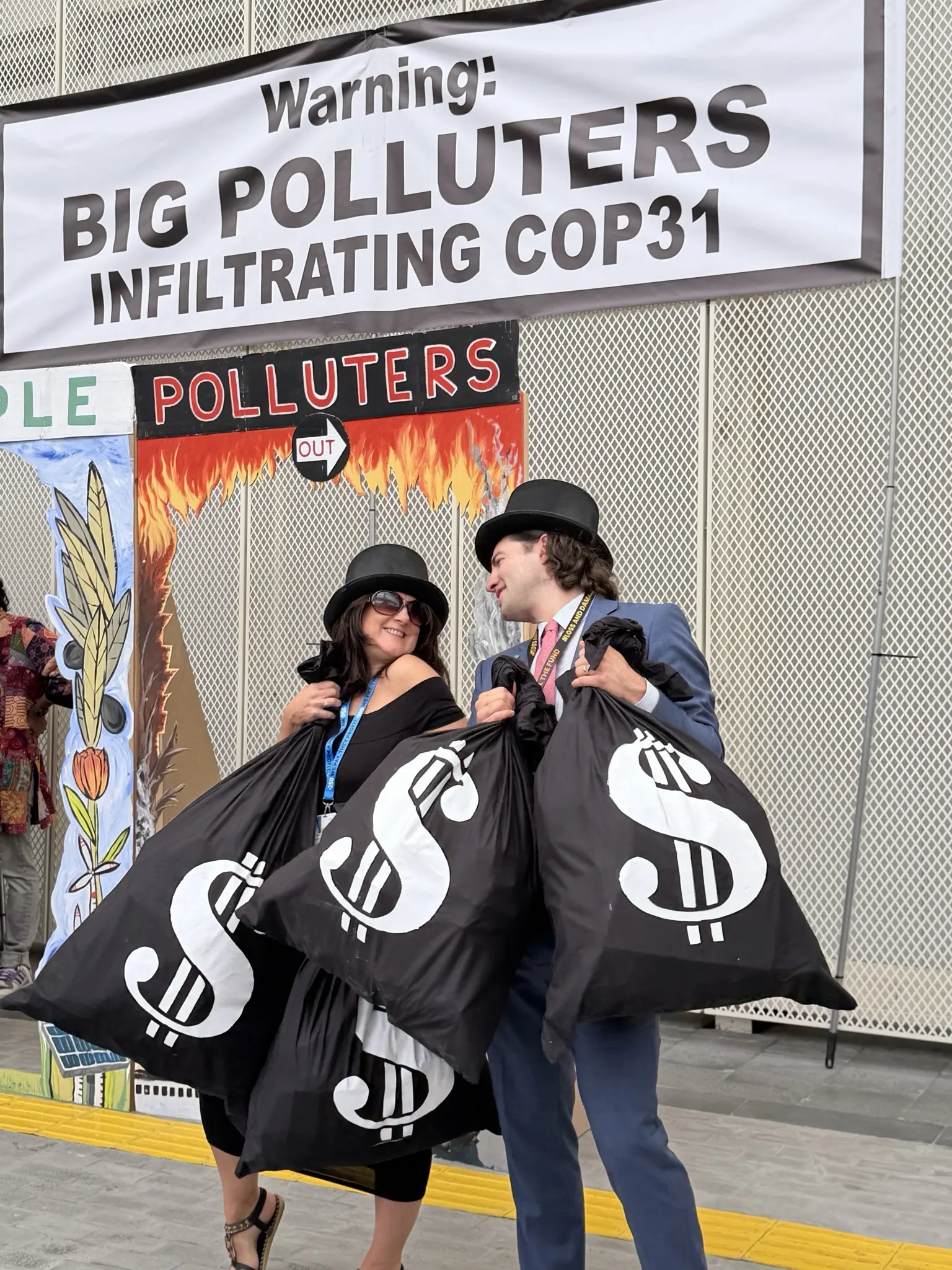
Friday was Finance Day, and it was packed. Our team joined a "Pay Up" action with partners in the morning. In the afternoon, our colleague Sara Shaw dressed up as an oil billionaire for an action with the Kick Big Polluters Out coalition, calling for fossil fuel lobbyists to be thrown out of the talks. (She was very convincing.)
That evening, the Make Polluters Pay coalition, which we're part of, presented António Guterres with an award for holding the fossil fuel industry to account. In his acceptance he gave one stat that says a lot: the nine biggest oil companies made around $95 billion in profit in a single quarter, while the UN fund that helps countries recover from climate disasters has received around $600 million in total. He also had the best line of the week: "The dinosaurs did not have a lobby. But fossil fuels do."
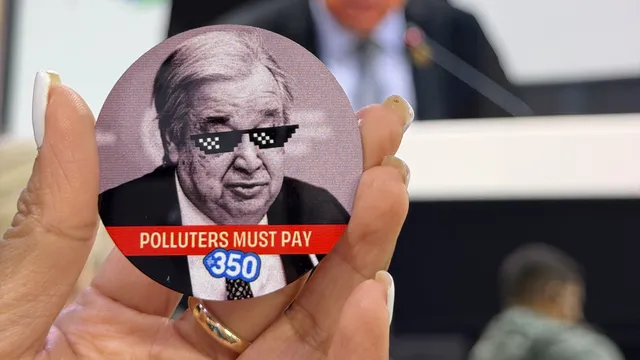
Our little Guterres pins went down a storm. And by the end of the night we'd also got a video from Greta Thunberg calling on governments to make polluters pay.
Saturday: more than 10,000 people on the streets
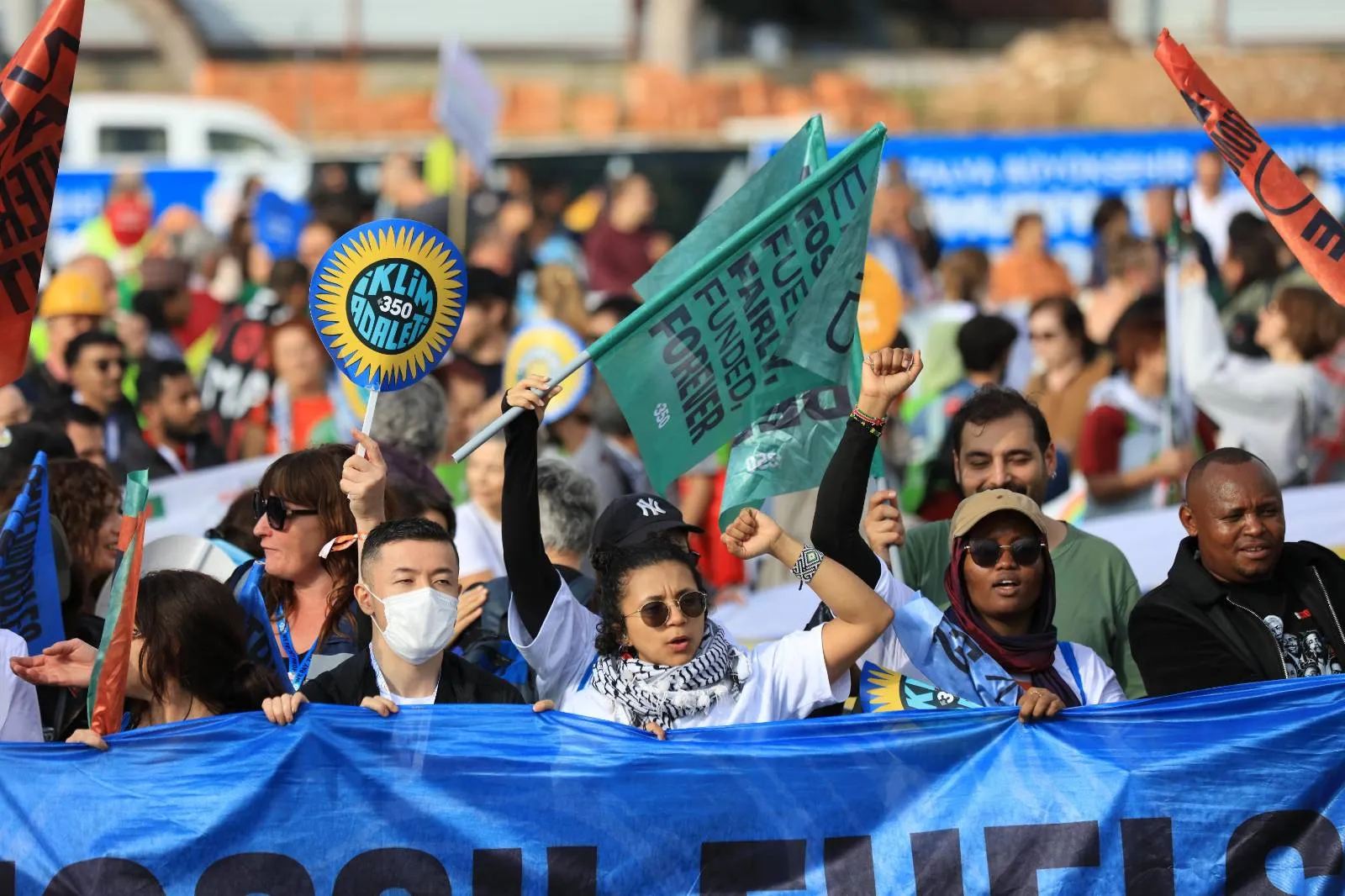
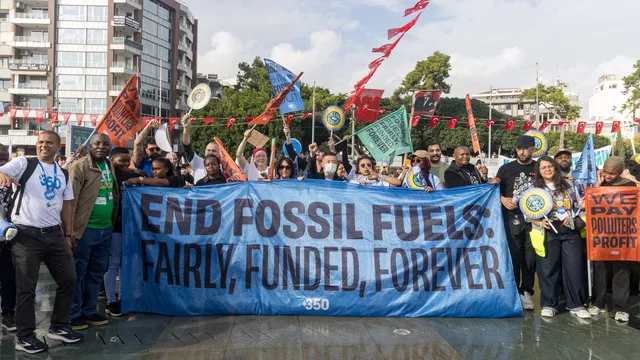
Saturday 14 November was the Global Day of Action for Climate Justice, with events on several continents. In Antalya, more than 10,000 people joined the People's Climate March: frontline communities, workers, Indigenous Peoples, young people and climate groups, all calling for polluters to pay and for an end to the fossil fuel era. Our teams took part elsewhere too, from a gathering of youth activists, faith leaders and community organisers in Nairobi to a march in France for children's present and future.
Inside the talks, the mood was very different. Türkiye's COP31 president Murat Kurum brushed off questions about fossil fuels in the final deal, telling reporters not to focus on "insignificant words." And Albanese and Chris Bowen, Australia's lead negotiator, were caught on a hot mic swapping crude jokes before a meeting with business leaders.
A few more good things
350 Türkiye, our team in the host country, celebrated its 10th birthday this week. An artist painted a mural at the Pacific pavilion inspired by the Pacific Climate Warriors. And our spokespeople were busy, with 350.org quoted in The Guardian, Bloomberg, the LA Times, DW and many more.
What happens in week two
Ministers arrive this week, and a first full draft of the deal has already dropped (spoiler alert: it's far from ‘good enough’). Now is when the real bargaining starts, and when the pressure on Türkiye and Australia matters most. We'll be pushing for a clear commitment to move away from coal, oil and gas, a process the hosts lead over the next year, and real money on the table for the countries hit hardest.
You can help from wherever you are. Our COP31 petition calls on Türkiye and Australia to set dates to phase out coal and plan their move away from fossil fuels. It passed 30,000 signatures on the first day of the talks, and we’re still using it to keep up the pressure. If you haven't signed yet, add your name here.
Related blogs
News, stories, and insights from the global climate movement.
Be a hero, and not a zero
Who showed leadership so far, who didn't, and what to expect from week 2 at COP31.
Guterres says it, we cheer it: Make Polluters Pay!
Climate campaigners threw a party for the UN chief at COP31. The reason? He keeps telling the world’s leaders to make polluters pay. And we agree!
COP31: Australia, don't be a blocker!
Australia is running the COP31 climate negotiations together with Türkiye, but blocking a plan to move off fossil fuels. Sign the open letter urging PM Albanese to lead.
