
Your salary doesn’t stretch like it used to. The air in your city is getting worse. Politicians promise change, and then nothing changes. At some point, most of us have the same thought: what’s the point? The status quo will never change because the forces behind it are too entrenched, too powerful, too far gone.
But history tells a different story. Every unjust system has looked permanent and untouchable until ordinary people challenged it. All major shifts in society start the same way: someone refuses to accept things as they are. They organize. Others join them. And they don’t stop.
Again and again, local citizens have come together through peaceful, nonviolent organizing — strikes, marches, sit-ins, boycotts, blockades — and changed the course of history. Here are seven moments that show that people power can change the rules:
1. The US civil rights movement dismantled legal segregation
In 1950s America, segregation was the social custom and the law. Black Americans were barred from attending the same schools, eating in the same restaurants, or even using the same restrooms as white Americans. Simple acts like even sitting in the “wrong” bus seat, could lead to arrest, violence, or worse.
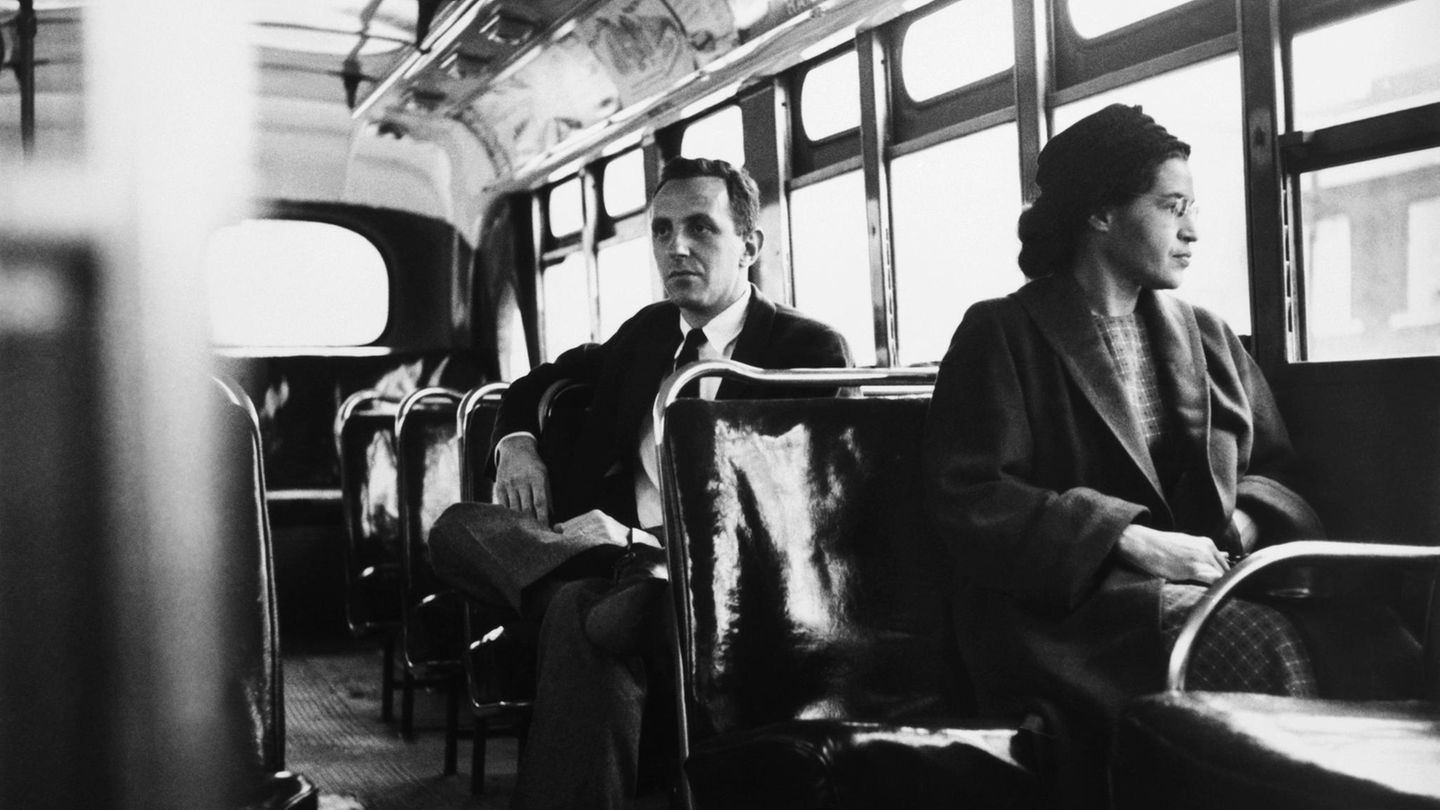
American civil rights activist Rosa Parks on a bus in Montgomery, Alabama. © Bettmann Archive / Getty Images
On 1 December 1955, Rosa Parks, a seamstress and activist, refused to give up her bus seat to a white person in Montgomery, Alabama. She was arrested. Within days, 42,000 Black residents boycotted the city’s buses for 381 days. They walked miles to work. Racial segregation on public transportation was abolished soon after, in 1956. The Civil Rights Act followed in 1964 making discrimination illegal once and for all.
2. The women’s global liberation movement rewrote the rules
Until 1974, women in the US couldn’t get a credit card in their own name. In the UK, a married woman needed her husband’s signature for a bank loan until 1975. In France, women couldn’t open a bank account or get a passport without their husband’s permission until 1965. These weren’t just “rules”, they controlled women’s everyday lives, locking millions out of economic independence, healthcare, and political power.
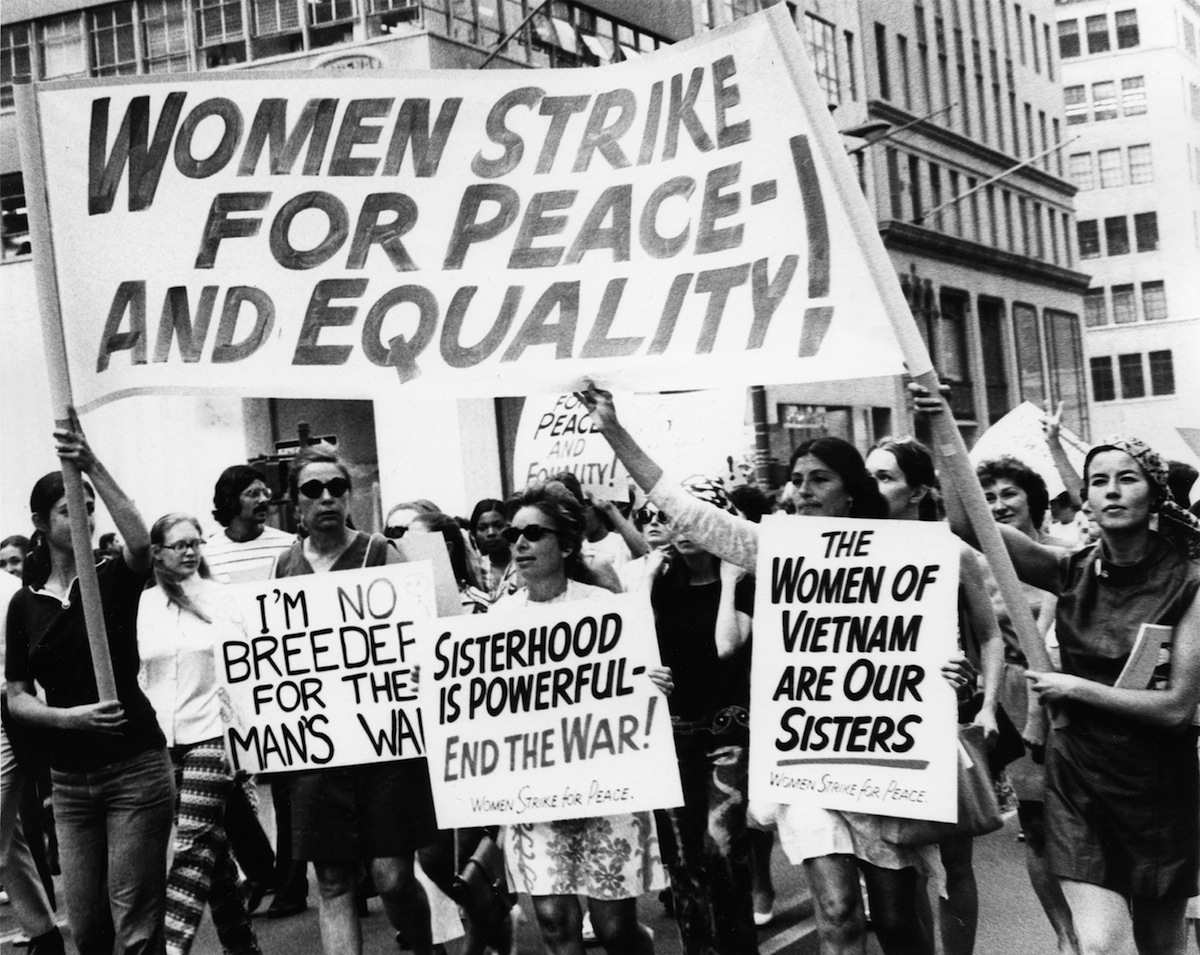
Women’s Strike for Peace-And Equality, Women’s Strike for Equality, Fifth Avenue, New York, New York, August 26, 1970. Photo: Eugene Gordon/The New York Historical Society/Getty Images
Until women themselves organized for change. In 1968, women machinists at Ford walked out over unequal pay, halting car production across the UK and forcing the government to pass the Equal Pay Act two years later. In 1970, tens of thousands of women marched in New York for the Women’s Strike for Equality demanding equal pay, free childcare, and abortion rights. And in 1971, Swiss women won the right to vote after decades of campaigning, one of the last countries in Europe to grant it. In 1975, 90% of Icelandic women refused to work, in offices, at home, everywhere, for a single day. The country stopped working. In 1979, the UN adopted CEDAW — the first international treaty to define discrimination against women and oblige governments to end it, now ratified by 187 countries. Women demanded these rights loudly, collectively, and across generations.
3. The anti-apartheid movement brought down a regime in South Africa
Apartheid was one of the most brutal systems of racial control ever built. Introduced in 1948, it dictated where Black South Africans could live, work, travel, and whom they could marry. The government enforced it with arrests, bans, torture, and killings.
Fed up with the system, ordinary workers went on strike. Then, in 1976, Soweto’s students marched against being forced to learn in Afrikaans and were met with live ammunition. Nelson Mandela, the leader of the African National Congress, the liberation movement that had been fighting apartheid since 1912, was locked away for 27 years to silence the movement. But it didn’t work. In 1994, after years of internal resistance, international pressure, and hard-won negotiations, South Africa held its first democratic elections with Mandela becoming president. For the first time in decades, Black South Africans could vote, run for office, and access public services without restrictions. Segregation laws were dismantled, neighborhoods and schools were legally integrated, and the country began rebuilding a more equitable society.

Young men protest in front of police photographers in Soweto in June 1976. Photo: Doing Violence to Memory: The Soweto Uprising
4. Standing Rock said no to a destructive pipeline in the US
The Dakota Access Pipeline was first planned to cross near Bismarck, North Dakota — a predominantly white city. Residents raised environmental concerns, and the route moved. This time, that meant crossing half a mile upstream from the Standing Rock Sioux Reservation’s only water supply, meaning any leak or rupture would contaminate the drinking water of thousands of people with oil, with no alternative source to fall back on. The Standing Rock Sioux tribe set up camp and refused to move. The protests became the largest gathering of Indigenous nations in over 150 years, with 300+ tribal nations standing together leading to the Obama administration halted construction in December 2016. The pipeline ultimately went ahead under Trump but Standing Rock changed what the world understands about whose land and water fossil fuels actually cost. The legal fight continues.
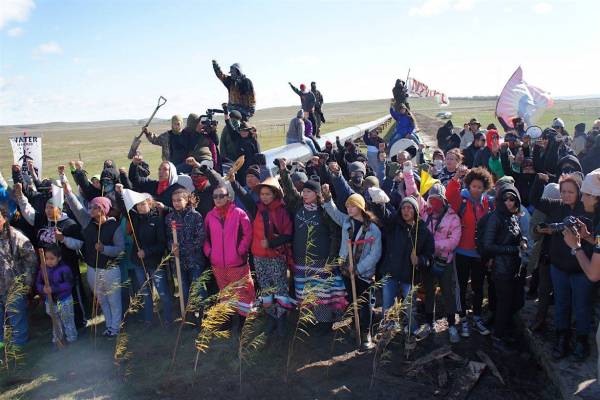
Women and children plant willow trees and corn along the pipeline route. Photo: Indigenous Environmental Network
5. Millions took to the streets to defend democratic freedoms in Hong Kong
When Britain handed Hong Kong back to China in 1997 after 156 years of colonial rule, the deal came with a promise: the city would keep its own laws, courts, and civil liberties for 50 years under the principle of “one country, two systems.”
By 2019, many people in Hong Kong felt that promise slipping away. A proposed extradition law would allow residents to be sent to mainland China to face trial in a legal system with no independent judiciary and conviction rates close to 100%. For many, it felt like the beginning of the end for the city’s freedoms.
In June 2019, over two million people took to the streets, in a city of just 7.5 million. They kept marching for months, despite arrests, tear gas, and escalating repression. Beijing eventually imposed sweeping national security laws. While the movement didn’t win all its demands, it galvanized a generation, forced international attention on Hong Kong’s freedoms, and inspired ongoing efforts to protect civil liberties.

Millions gather on the streets of Hong Kong. Photo: By Studio Incendo – Hong Kong anti-extradition bill protest, CC BY 2.0
6. Indian farmers defeated three unjust laws by a government that wouldn’t budge
Nearly 60% of India’s population depends on agriculture. The government’s 2020 farm laws, framed as market liberalisation, proposed to dismantle a guaranteed minimum price system protecting small farmers from destitution. In a country where farmer suicides are already a public health crisis, the stakes were existential. Farmers responded with one of the largest protests in modern history. They set up camps outside Delhi and blocked highways for more than a year, in the cold, the heat, the rain and through COVID. Women were on the frontlines and around 700 farmers died during the protest. In November 2021, the government repealed all three proposed laws. Organised, patient, collective power worked against a government that looked immovable.

Indian farmers protesting in the national capital. Photo: Randeep Maddoke
7. A global movement put the climate crisis on the agenda, and kept it there
Scientists had been warning about climate change since the 1980s. By the 2000s, the evidence was overwhelming: burning coal, oil, and gas was heating the planet and pushing ecosystems toward collapse. But governments were still stalling, and fossil fuel companies were still expanding. So ordinary people organized. In 2009, ahead of the UN climate summit in Copenhagen, people in 181 countries took to the streets. In 2014, 400,000 people marched in New York — the largest climate march in history at the time. The following year, that pressure helped deliver the Paris Agreement, the first deal to unite nearly every country on earth around a shared commitment to limit warming to 1.5°C, the threshold beyond which climate scientists warn the consequences will become catastrophic and irreversible. Addressing the climate crisis and switching to renewable energy is now a priority on the global political agenda, because millions of people refused to stay silent.
But the fight is far from over. Today, climate disasters might still feel distant. Something happening somewhere else. But they’re getting closer. To our cities. Our homes. Our lives. And just like every movement before us, we have a choice: Watch them happen or change what happens next. See what we can do: