
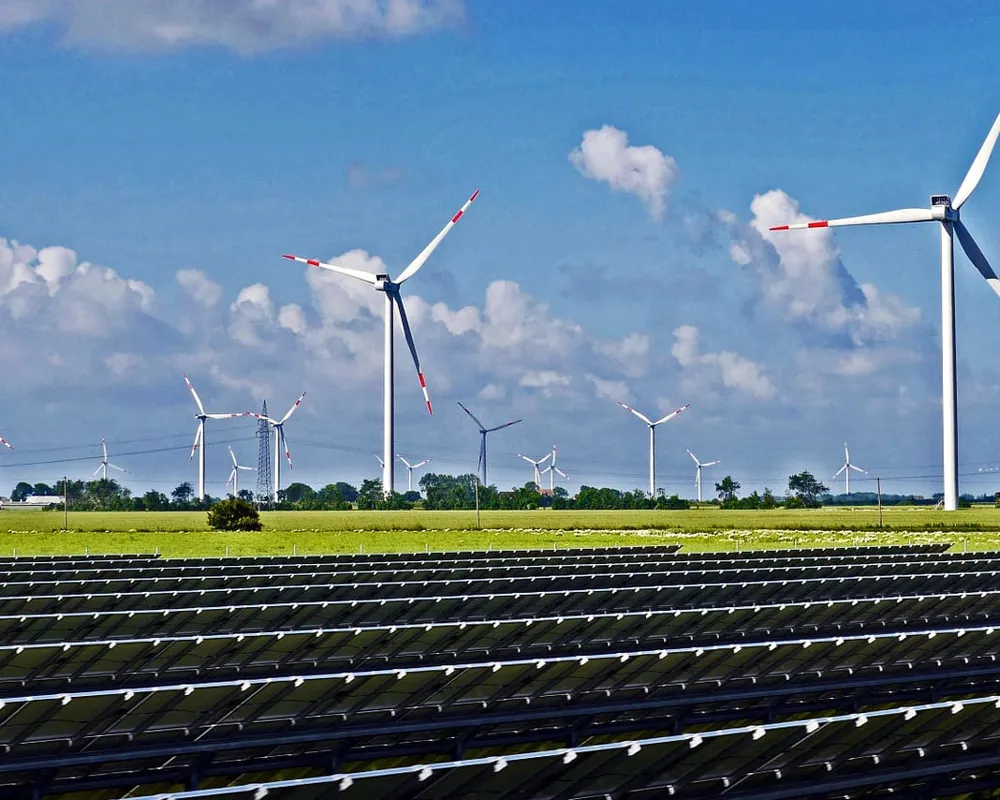
The world can feel like it’s moving in two directions at once. One day, leaders talk about climate action and the next, we see fresh drilling pushes and new fossil deals, from the Arctic to Asia and South America. But the bigger truth is this: the ground is shifting beneath the polluter industry, because the world is leaving fossil fuels behind and already rapidly moving onto clean, renewable energy.
That’s why January 26, the International Day of Clean Energy, is fitting a moment to celebrate progress, and to double down on a just energy transition that works for everyone. Here are eight reasons we should feel hopeful today:
1. Clean energy is winning the investment race
Clean energy isn’t “emerging” anymore, it’s already outcompeting fossil fuels. The International Energy Agency projects around $2.2 trillion in clean energy investment in 2025, compared to roughly $1.1 trillion going into oil, gas, and coal. That’s the transition happening in real time. And it’s not slowing down: clean investment has outpaced fossil investment for years, and the gap keeps widening as technology improves and costs fall.
2. More governments are organizing to phase out fossil fuels
Despite weak consensus outcomes at the annual UN talks, COP30, in Brazil this past November, the diplomatic track is shifting. During the Summit, more than 80 countries from the Global South and Global North jointly called for a roadmap to phase out coal, oil, and gas. That matters because it shows unanimous agreement isn’t a necessary condition for political momentum for climate action. Countries are increasingly treating fossil fuel phaseout as a shared destination, and building the political alignment to get there. For instance, A growing “coalition of the willing” is building real phaseout architecture. Hosted by Colombia and the Netherlands’, the world’s first conference on Transitioning Away from Fossil Fuels this year in April aims to design “legal, economic, and social pathways” for a just transition beyond coal, oil, and gas. The goal isn’t a theoretical one-size-fits-all exit, it’s a practical, achievable roadmap tied to jobs, protection, and real opportunity.
3. The clean transition is becoming common-sense economics
Investor behavior too, is shifting in a clear direction. Not because “green” is fashionable, but because fossil-heavy assets look increasingly risky in a changing world. In a Morgan Stanley survey of 950+ major investors, most said they plan to increase sustainable investing over the next two years. The logic is straightforward: future-ready assets look safer and more profitable over time, while fossil dependence creates volatility, stranded assets, and reputational risk.
4. The rules are tightening for fossil fuel companies
Big investors are no longer willing to bankroll fossil companies that can’t prove they have a credible plan for the transition. That shift is already visible: in December 2025, Swedish pension fund AP7 cut off investments in companies it judged incompatible with climate goals. This is how the phaseout accelerates in practice, not just through speeches, but through capital discipline. “Business as usual” is becoming a financial liability, not a safe bet.
5. Courts and legal standards are shifting toward climate accountability
The legal “reasonableness standard” is moving upward, closer to what climate science actually requires. On July 23, 2025, the International Court of Justice issued a landmark advisory opinion strengthening what states owe on climate action, including on fossil fuel production and subsidies. It’s not binding, but it’s directional: the legal centre just shifted. That means more pressure, more scrutiny, and more risk for governments and corporations that keep expanding fossil fuels.
6. People are choosing solutions that improve life, not just emissions graphs
Clean energy is not only about cutting carbon. It’s about making daily life safer and more affordable: lower bills, cleaner air, and resilience in the face of energy and price shocks. When communities can generate and control power locally, through distributed solar, storage, and public renewables, they’re less exposed to global fuel price spikes and corporate profiteering. The transition becomes real when people can feel it: stability, dignity, and control over essential services like energy.
7. Even conservative energy authorities have drawn a line on new fossil supply
Campaigners and climate activists aren’t the only ones saying “stop drilling.” Even the International Energy Agency, one of the world’s most mainstream energy institutions, has made the case in its Net Zero pathway: a future where no new oil and gas fields should be approved for development beyond those already committed. That’s not radical politics. It’s basic risk management in a world that can’t afford more fossil lock-in. The safest investment now is building the clean energy system faster.
8. Clean energy could save us trillions, and it’s already getting cheaper
A fast energy transition is now the cheapest option on the table. A University of Oxford study found shifting to renewables by 2050 could save the global economy at least $12 trillion in energy system costs, even before counting avoided climate disasters. That’s because renewables are technologies, not commodities: costs fall as we scale. Over the last decade, solar fell ~90%, wind ~70%, and battery storage ~85% — while the sun and wind stay free.
As we celebrate real progress toward a 100% renewable future, we can’t forget this: climate disaster is already here, and stopping fossil fuel expansion is the bare minimum for survival.
Clean energy is rising. But so are floods, fires, heatwaves, bill shocks, and fossil disasters. So the path forward has to do two things at once: end the harm, and build the alternative.
1) Stop the harm: no new fossil fuel expansion
Governments and regulators must stop approving new oil, gas, and coal projects — and end fossil subsidies. When floods, fires, heatwaves, or bill shocks hit, alongside the media, we must connect the dots fast: this damage is driven by political choices that protect polluters. Courts must enforce climate and liability laws, hold governments and companies accountable for harm, and unlock compensation through litigation. Insurers must price climate risk honestly, withdraw cover from new fossil projects, and stop shielding polluters from the real costs of their damage.
2) Make polluters pay
Fossil fuel companies shouldn’t profit while communities pay the price. Governments must enforce real accountability through liability, levies, and an end to fossil impunity — so recovery and resilience are funded by those who caused the damage.
3) Deliver the Right to Energy
Governments, regulators, utilities, and cities must deliver affordable, resilient clean power people can feel. That means investing in distributed renewables, storage, and grids — plus tools like lifeline tariffs and free basic electricity where possible.
4) Move money to the future
Investors, banks, and insurers must stop financing expansion and shift capital toward clean energy solutions that are credible, community-backed, and built to last.
5) Let’s organize to make the transition unstoppable
We make the shift away from fossil fuels real by organizing locally and forcing decision-makers to act. When a crisis hits, we show up, naming who’s responsible and demanding protection and justice.
This is how we win: make fossil expansion harder, and make real alternatives easier.
Related blogs
News, stories, and insights from the global climate movement.

Why Africa's fight for Climate Reparations should question historical structural Injustices
Despite contributing under 4% of global emissions, Africa faces the worst climate impacts. At a symposium in Mombasa, Kenya, leaders call for historical polluters to pay $170 trillion in climate reparations, not as voluntary charity but a binding legal liability.
Indonesia’s wildfire crisis cannot be business as usual
Every wildfire season, I watch the smoke arrive. This year, the fires have gotten worse.

African Symposium on Climate Reparations
Africa is on the frontlines of a climate crisis it did not create. True climate action requires more than promises - it demands accountability, equity, and repair.
