
After two weeks of heavy negotiations, this year’s UN climate talks or COP30, wrapped up yesterday. Set in Belém, in the Brazilian Amazon, with Indigenous leaders and civil society front and centre, this Summit was a chance to turn years of promises into real action. And did that happen? Yes and no.
What was at stake
COP30 was meant to be a “COP of Implementation” the moment governments would finally move from promises to action. And we arrived in Belém with three big fights on the table:
- Fossil fuels phaseout: This was the defining fight. Would governments commit to finally ending the coal, oil, and gas driving the climate crisis?
- Climate finance: A real transition needs real money. Wealthy countries — the biggest historical polluters — must pay their fair share for renewable energy, adaptation, and protection for the communities already living the impacts.
- Just renewables: Phasing out fossil fuels must go hand in hand with a fair shift to renewable energy. That means centering Indigenous leadership and ensuring frontline communities have real power in every decision.
While negotiators argued behind closed doors, a different — and much stronger — force was rising outside the rooms.
People power front and center
After three COPs in petro-states where civil society was pushed to the margins, COP30 felt like a breath of fresh air. This Summit unfolded in the Amazon — one of the most biodiverse places on the planet, protected and defended by Indigenous Peoples long before the UN ever existed.
And for the first time in years, people could rally openly for real climate action. Indigenous Peoples, frontline communities, youth, activists, and everyday people came together and showed what genuine climate leadership looks like. Their voices spilled from the streets into the halls of COP30, raising the pressure on world leaders to deliver real progress.
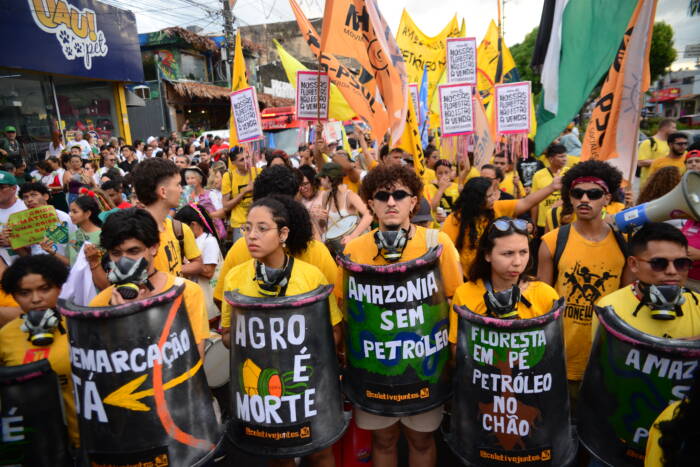
The Global March for Health and Climate in Belém, Brazil, united health workers, students, and Indigenous leaders to spotlight the impacts of the climate emergency on health. Photo: Embaixada dos Povos
During the full two weeks of COP30, protests and creative actions took over Belém. Civil society groups built their own dynamic spaces outside the official venue — buzzing almost nonstop with debates, workshops, music, and cultural expressions that kept the energy alive day and night.
The standout moment was the People’s March for Climate Justice, which united more than 70,000 people on November 15th. With dancing, chanting, and a symbolic funeral for fossil fuels — giant coffins and an inflatable Earth included — the march transformed collective grief into powerful, determined resistance. It sent a clear message: real climate leadership is coming from the people.
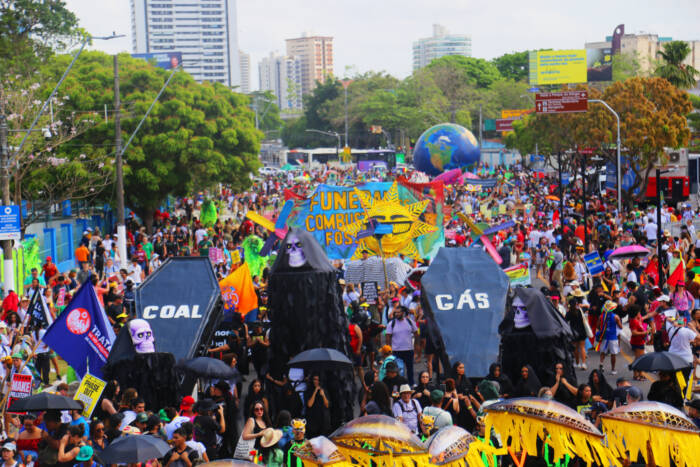
People’s March for Climate Justice in Belém, Brazil with a funeral for fossil fuels. Photo: Artyc Studio
And the actions didn’t stay outside — they also made their way into the “Blue Zone,” the official UN negotiation area. from banner drops to capybara-themed actions calling out the lack of ambition, finance, and justice, activists kept reminding negotiators of a simple truth: communities want rivers, not pipelines, and transitions that serve people, not polluters.
And this pressure worked. Because of people power, COP30 delivered some real wins:
1. Justice for Indigenous and frontline communities
COP30 saw one of the largest Indigenous delegations in history — around 3,000 representatives. Their demands were clear: demarcate Indigenous lands, stop fossil fuel expansion, and fund community-led solutions. Their presence and pressure helped lead to a historic decision of demarcating ten Indigenous territories on 17 November. It was a major step forward for land rights, climate justice, and recognizing Indigenous leadership in protecting our planet.
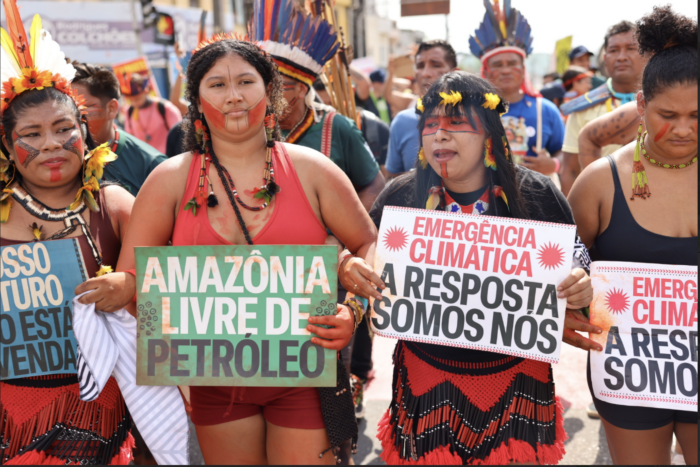
Indigenous leaders at ‘The Answer is Us’ march in Belém, Brazil on 17 November. Photo: Hugo Duchesne / 350.org
Inside the COP halls, the push for Indigenous leadership to be respected — not sidelined — also delivered concrete results. In the final text, countries agreed to a Just Transition mechanism known as the Belém Action Mechanism (BAM). This new framework will guide the global shift to renewable energy, and it includes strong language on Indigenous rights and direct support for communities most impacted by extraction. In practice, the BAM creates a coordinated way for countries to plan their just transitions so that workers and frontline communities aren’t left behind as the world moves away from fossil fuels.
2. Momentum for a fossil fuel phase-out
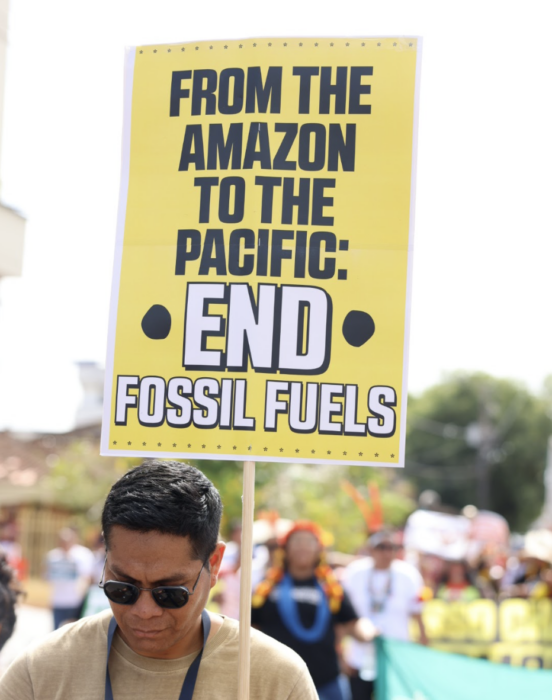
The TAFF was one of the most heated topics at COP30 — and although it didn’t make it into the final text due to fierce opposition from a handful of countries, the momentum behind it is only growing. COP30 President André Corrêa do Lago announced that Brazil will move ahead and develop its own national roadmap for phasing out fossil fuels, and signaled that stronger language will return to the negotiation table in official meetings between this COP and at the next one. Colombia also stepped up, announcing it will co-host the first International Conference on the Just Transition Away from Fossil Fuels next year — a space to turn political momentum into concrete plans and global cooperation.
The finance gap remains
Wealthy countries showed up with big speeches, but once again failed to deliver on the most urgent need: real money to fund a fast and fair transition, and to help vulnerable nations adapt to escalating climate impacts. Indigenous and traditional communities were left waiting — again — for the direct finance they need, while the EU, Japan, and Canada repeatedly blocked progress.
Communities already living through floods, droughts, fires, and displacement rely on adaptation finance to survive and rebuild. Yet we still have no agreed figure, no baseline, no guarantee of public finance — and now the deadline has been pushed to 2035. Every year of delay means millions of people remain unprotected on the frontlines of the crisis.
COP30 showed us: The real climate leaders are the people
COP30 didn’t deliver everything we needed, but we did secure meaningful wins — and something even bigger: a clear reminder of what people-powered leadership can achieve. We’re walking away with concrete steps toward a just transition and a growing global push to end fossil fuels for good.
On the ground, the transition is already happening. Indigenous Peoples, youth, workers, and frontline communities are building solutions, defending territories, and organizing for a future that respects life. They’re not waiting for permission — and certainly not waiting for slow-moving negotiations.
The truth is unavoidable: fossil fuels are losing social license, political power, and economic ground — and people are the ones making it happen. A 100% clean energy future is closer than it looks. Our collective task now is to keep up the pressure on wealthy countries and major polluters to finally pay their fair share.