
War impacts us in many more ways than we realise. When conflicts erupt, people suffer immediately. Civilians lose their lives, families flee their homes, and communities are torn apart. But wars also send shockwaves far beyond the front lines: through our energy systems, our economies, and the climate.
Right now, we’re watching this unfold in real time. A few weeks ago, on 28 February 2026, the United States and Israel launched military strikes on Iran, triggering a rapid escalation across the Southwest Asia (the Middle East)*. Iran struck back at US bases, Gulf states, and oil infrastructure across the region — and declared the Strait of Hormuz closed to shipping. This region sits on more than half the world’s oil reserves. What happens there doesn’t stay there. Within days, the price of oil and gas across the world was in chaos, and everyone everywhere started footing the bill.
What is the Strait of Hormuz and why is it so important?
The Strait of Hormuz is a narrow strip of sea between Iran and Oman. It connects the Persian Gulf to the Gulf of Oman and rest of the world’s oceans. It is only about 33 km wide at its narrowest point: roughly the sort of distance you could cycle in an hour.
But its size is deceptive. The strait carries one-fifth of all the oil consumed globally every day, as well as large quantities of gas. Oil and gas from Saudi Arabia, Iraq, Kuwait, and the UAE must pass through it before reaching the rest of the world. Any disruption like conflict, attacks, or blockades can instantly shake energy supply worldwide.

The Gulf of Oman connects the Arabian Sea with the Strait of Hormuz. Photo: picture alliance/dpa/NASA/The Visible Earth
Following the strikes on 28 February, Iran shut down the strait, not by a formal blockade but through military actions and threats which have made the strait too dangerous for most commercial vessels and caused major disruption to global oil shipping in March 2026. Around 1000 vessels, including over 400 oil tankers, are currently backed up or waiting near the Strait of Hormuz. Oil traffic has dropped by approximately 70%. Roughly $20 million barrels of oil per day are now off the market, which around 20% of energy the world consumes. Iran also struck a major refinery in Saudi Arabia and a gas facility in Qatar, taking about 20% of the world’s natural gas supply offline.
Analysts warn that if the strait stays closed, oil could spike to $150 a barrel. Every time that number goes up, your bills go up too.
How this conflict is hitting our household bills
In the first week after the conflict began, Europe effectively paid around €1.4 billion extra for gas, according to new analysis by 350.org. Gas prices jumped from around €30 per megawatt hour to nearly €50 — a spike driven purely by market fear about supply disruptions. For households and businesses already struggling with high living costs, these spikes translate quickly into higher bills and deeper economic pressure.
Oil prices also spiked around 8% in a single day. By the end of that week, oil had surged 36% to over $90 a barrel. Diesel prices in Europe doubled. Jet fuel prices in Asia rose by nearly 200%.
Europe is not alone. Around 84% of the oil that flows through the Strait of Hormuz goes to Asia, meaning more import-dependent countries are now all facing supply disruptions. In India, restaurants are warning of shutdowns as governments ration gas. Thailand has suspended civil servant travel. The Philippines and Vietnam have introduced workplace measures to cut energy use.
Fossil fuels are driving both this conflict and the climate crisis
While the conflict continues and fuel prices spike, the deeper crisis keeps accelerating. Fossil fuel-induced global warming has nearly doubled in pace since 2015 — rising from about 0.2°C per decade to roughly 0.35°C per decade. At this rate, the world could breach 1.5°C of warming within just a few years. New research also suggests sea levels may be significantly higher than previously estimated. All these changes will (and already) have significant impacts on our lives and livelihoods.
The fossil fuelled system driving geopolitical instability is the same one pushing us toward climate breakdown.
The real lesson from the Strait of Hormuz
The Strait of Hormuz shows us something we already knew but perhaps keep forgetting: fossil fuels are not just dirty. They are dangerous. They tie the price of heating or cooling your home to wars you have no say in. And they give enormous power to whoever controls the pipelines, the tankers, and the chokepoints.
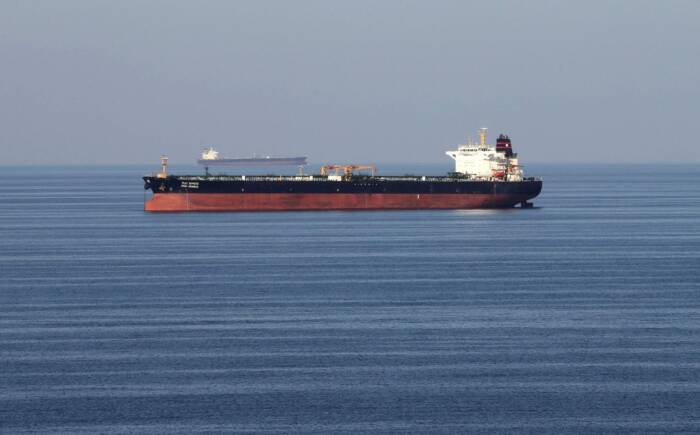
Oil tankers pass through the Strait of Hormuz, prior to the conflict. Photo: REUTERS/Hamad I Mohammed
Renewable energy offers a fundamentally different way of powering our world. Locally-led solar and wind systems cannot be blockaded at sea. They do not spill into oceans. They do not tie your energy bills to conflicts happening thousands of kilometres away. And once built, renewables provide energy for decades while fossil fuels must be burned and re-supplied every day. They are a long term solution for stability and lower prices.
Every step away from fossil fuels is a step away from the instability and wars that come with them.
*The conflict is first and foremost a human tragedy. As violence escalates in the region, we mourn the lives lost and stand with the communities whose homes and futures are being shattered.