
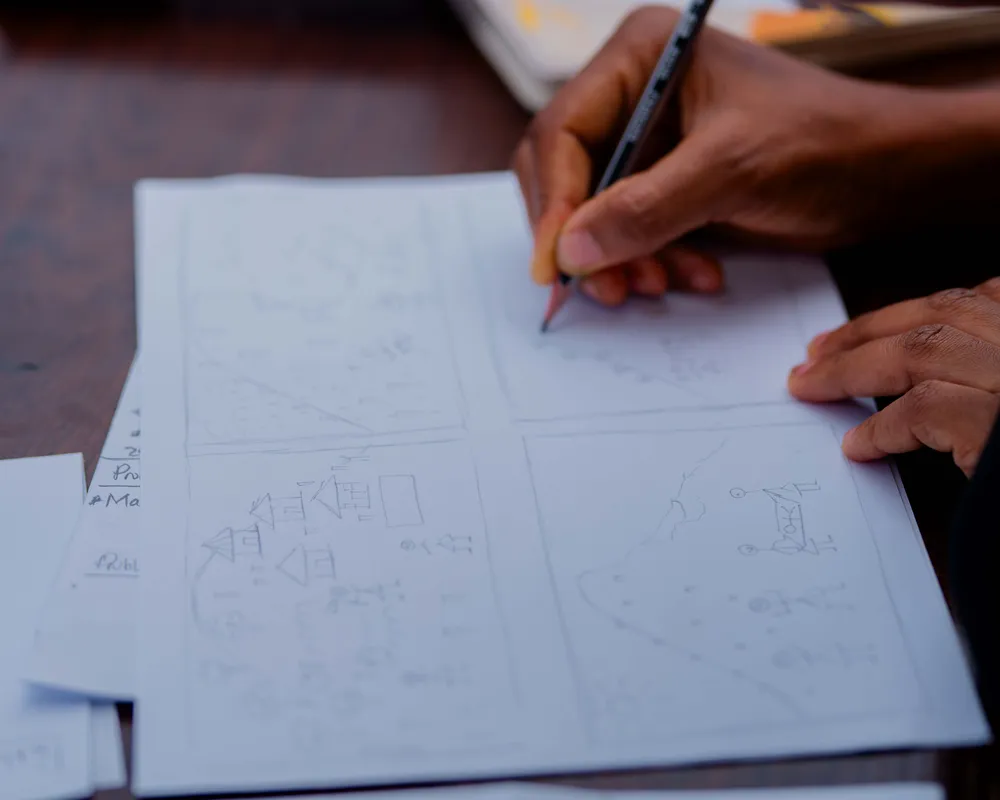
Editor’s note: Nathan Mpangala, a Tanzanian cartoonist and grassroots comics facilitator, led the Grassroots Comics on Climate Action workshop in Dar es Salaam on 7–8 October 2026, as part of the REPower Tanzania campaign with support from 350Africa. In this piece, Nathan shows how simple comics can turn lived climate experiences into stories that educate, spark conversation, and demand action.
Eleven young people. Two days. Paper, pens, and markers. By the end, they had something most climate reports never manage to capture: the climate crisis told in the words, humour, and drawings of the people living it.
Climate change in Tanzania is not a forecast. It is drought in one region, floods in another, failing harvests, dry wells, and disappearing ecosystems. Yet the people living through these changes are rarely the ones whose voices shape the conversation. Too often, their stories are told about them, by experts and organisations far from home.
That is what grassroots comics set out to change.
What is grassroots comics?
Grassroots comics is a community-owned visual communication and development methodology pioneered by Indian cartoonist Mr. Sharad Sharma through World Comics India in the late 1990s. The approach has since been promoted internationally through the World Comics Network and its partners, including World Comics Finland.
At its heart, grassroots comics enables communities to make their voices heard in their own languages, using their expressions, visual styles, everyday experiences, local humor, and stories. Through simple, one-page, black-and-white comics, community members can identify challenges, explore their root causes, and propose possible solutions.
Unlike conventional comics, grassroots comics do not require professional drawing skills nor any art degree or expensive equipment. All you need is a pen, paper, and a story to tell!
Why can we use grassroots comics to communicate climate change?
The climate crisis affects everyone, but its impacts are experienced differently across Tanzania. Droughts, floods, food insecurity, water shortages, changing farming conditions, and the loss of local ecosystems are increasingly affecting people's lives and livelihoods.
People experiencing these changes firsthand should have opportunities to document and communicate their experiences themselves, rather than depending entirely on external organizations or experts to speak on their behalf.
My belief in the power of grassroots comics motivated me to contribute my skills, time, and resources to organize the grassroots comics on climate action workshops. The aim of the workshop was to empower young people to become climate storytellers, translating their lived experiences into accessible visual stories while introducing them to a methodology they could continue using in their communities.
Held on 7 - 8 October 2026 in Dar es Salaam, the workshop was part of the REPower Tanzania activities, supported by 350Africa and organised in collaboration with Green Conservers and Global Platform Tanzania. This was more than an art workshop. It was an opportunity for participation, learning, and storytelling, creating space for young people to document the climate challenges affecting their communities and share their perspectives with wider audiences.
Grassroots comics proved to be a powerful tool for community-led climate communication because:
- Everyone has a story worth telling. No drawing skills are needed. Participants create their own narratives in Swahili, using their own expressions, humour, and cultural references, so the stories feel immediately relevant to everyday life.
- It’s simple, affordable, and accessible. All it takes is paper, pens, pencils, and markers. No professional artistic skills, no expensive equipment.
- It reaches people other formats miss. By combining words and drawings, comics simplify complex climate issues, grab attention, and spark discussion, with ideas that are easy to follow across ages and literacy levels.
- It inspires reflection and action. Each comic lays out a problem, its causes and consequences, and practical solutions, helping readers reflect on their own circumstances and consider how they can respond.
- The stories travel. Participants share their comics on social media, carrying local experiences far beyond the communities where they were first drawn.
Inside the workshop
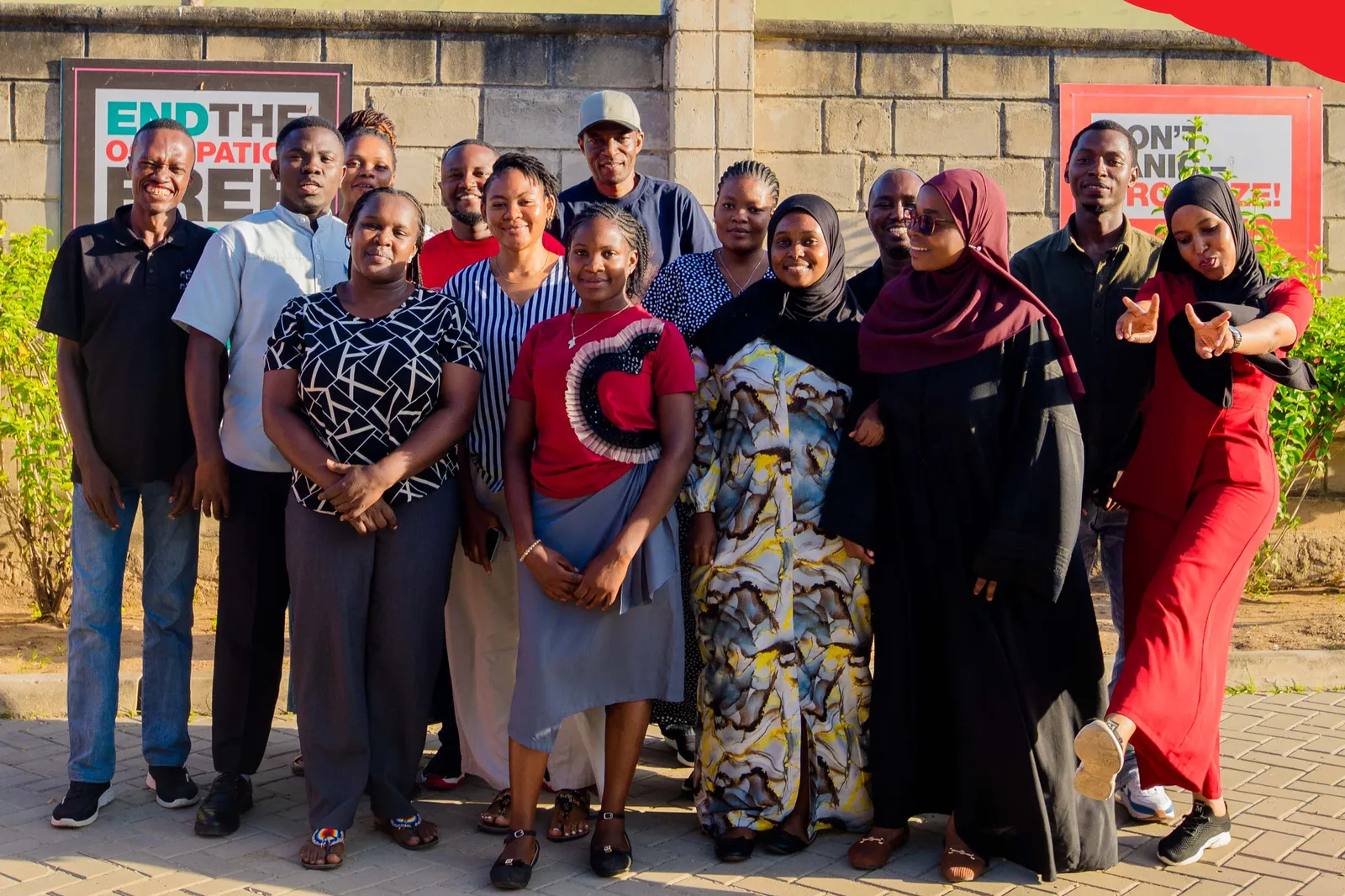
Eleven participants took part in the two-day workshop: seven women and four men. To ensure that the grassroots comics reflected diverse experiences, before the workshop each participant was asked to identify and document a climate-related experience from their own lives or communities.This preparation helped bring together stories from different parts of Tanzania. The participants represented stories from Mtwara, Kilimanjaro, Kagera, Iringa, Singida, Lindi, Mbeya, and Dar es Salaam.
The first day began with a session facilitated by Baraka Machumu, a photojournalist and Climate, Environmental and Social Justice Specialist who introduced the science and causes of climate change and, crucially, who bears its costs. Participants then connected that bigger picture to their own experiences, sharing their stories and exploring how to turn them into clear, compelling visual narratives.
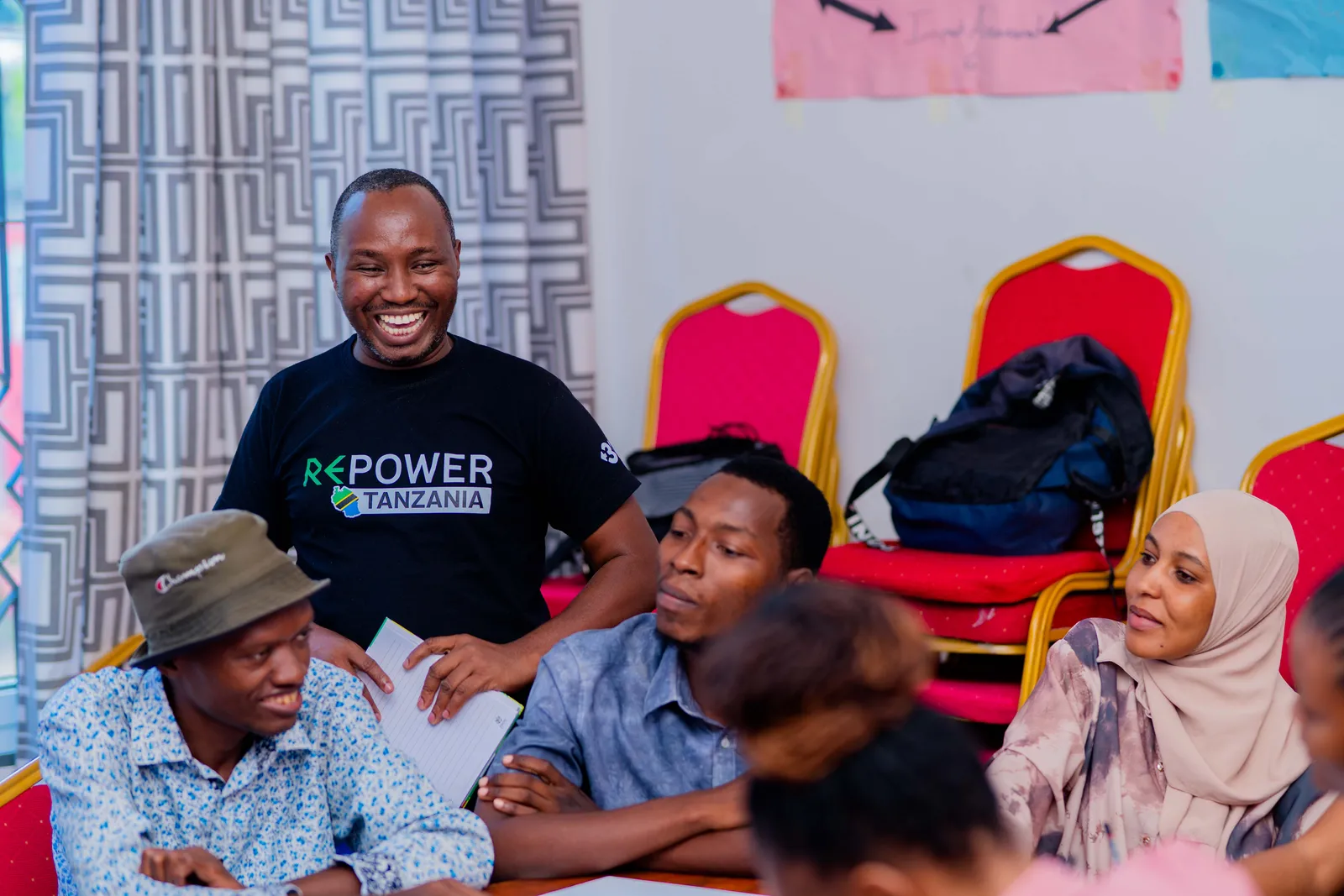
On the second day, I introduced participants to the Grassroots comics methodology, its historical background, and its role in communication and community engagement. We began with simple drawing exercises, including practicing stick figures, before reviewing each participant's story idea and discussing how best to communicate it visually.
Using photocopy paper, pencils, erasers, pens, rulers, and markers, participants developed their stories into one-page, black-and-white comics. Each story followed four basic steps: Problem, action, reaction, and solution. This structure guided participants in presenting the situation they had experienced, the action taken or response made, the resulting consequences, and possible solutions or recommendations.
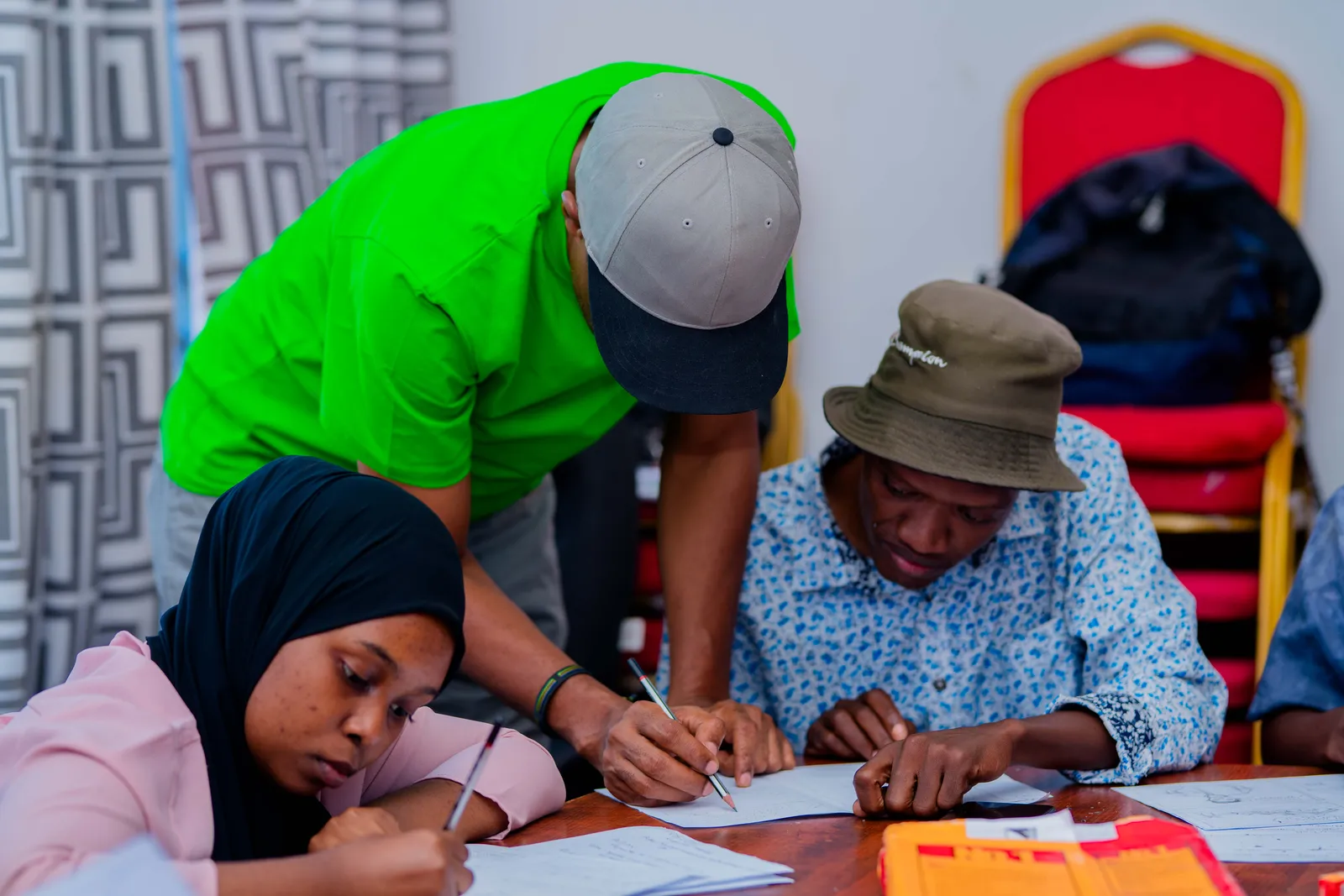
Participants worked from their initial drafts to create their final comics, measuring and arranging four panels, drawing the scenes, inking the artwork, and cleaning up the finished pages. They also translated their comics into English to make the stories accessible to wider audiences.
By the end of the workshop, participants had transformed their climate experiences into visual stories that could be shared with their communities and beyond.
The workshop created an opportunity for young people to learn a new communication skill while reflecting on climate change through their own experiences. Farida Said, a participant from the workshop said “Grassroots Comics on climate change is an effective approach that gives us the freedom to express the challenges we experienced due to climate change. Since some people cannot read or write, these comics make it easier for them to understand our lives.”
Taking the stories beyond the workshop
The workshop did not end when the participants put down their pens.
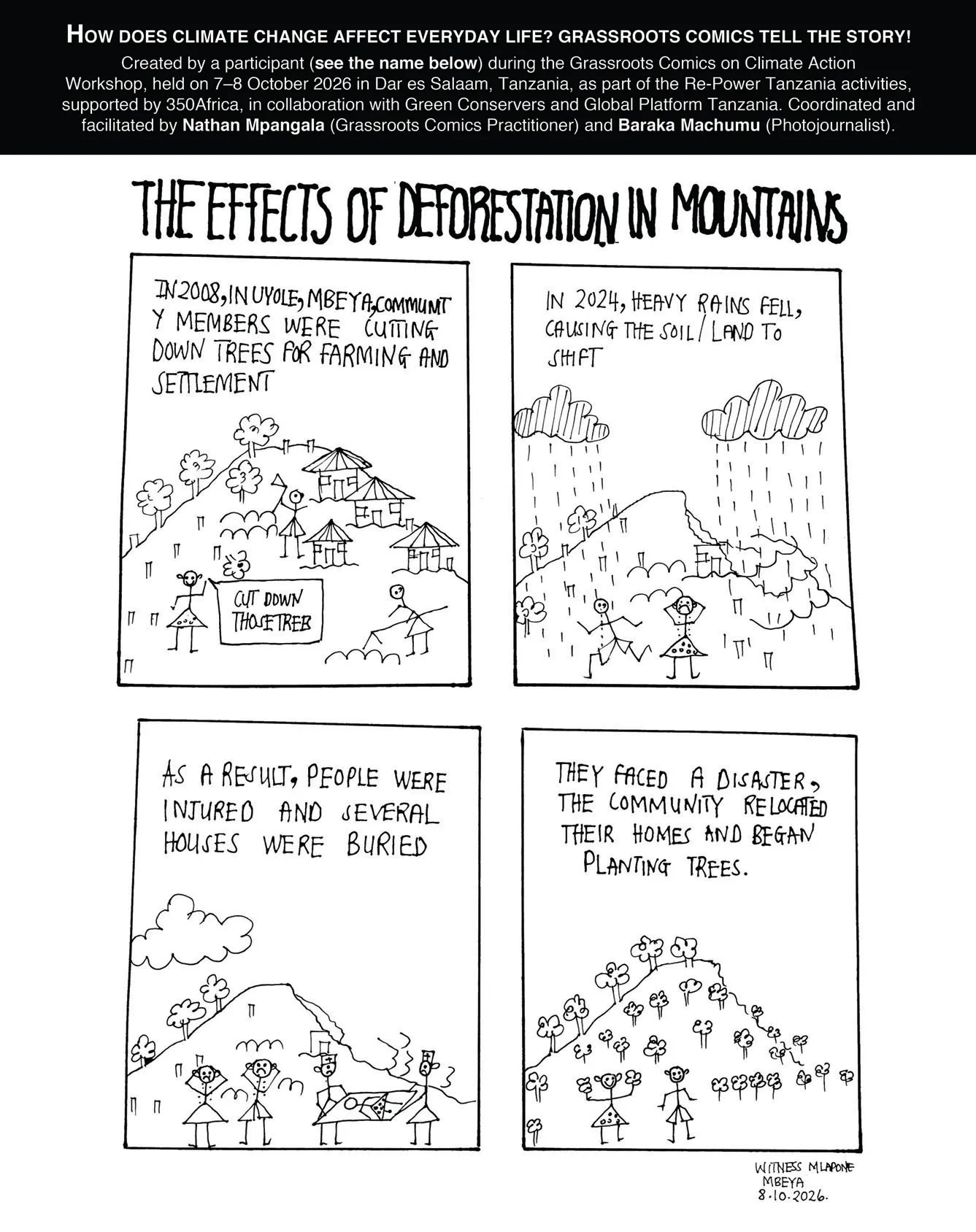
Over the following three days, I digitally refined the comics, improving the clarity and sharpness of the lines so that the artwork would remain legible and effective when viewed on digital screens. The finished comics were then prepared for publication and shared across social media platforms.
This process connected the participants' local experiences with wider conversations about climate change. Stories that began with individual observations could now reach audiences beyond the workshop, helping raise awareness of the ways climate change affects people's daily lives. “Grassroots Comics is an important platform for educating communities about climate change and environmental conservation. I would like to see this knowledge continue reaching young people and the wider community.” said Yasri Mtiniko, one of the participants from the workshop.
Digital sharing also demonstrated how a simple, low-cost communication methodology can connect community storytelling with broader public engagement.
From local experiences to climate action
The grassroots comics on climate action workshop reinforced my belief that communities should not be viewed only as victims of climate change or as audiences for messages developed elsewhere. They can also be authors, communicators, and active contributors to climate solutions.
Through grassroots comics, young people can document their experiences, question the causes of the challenges they face, and communicate their ideas in ways that are accessible to others. Their stories can contribute to public awareness, community dialogue, and conversations about climate justice and the transition to cleaner energy. Latifa Ally, a participant of the workshop said “It was a very good workshop. I learned how to communicate climate change messages through grassroots comics in a simple, friendly and powerful way. It opened my eyes to how individual drawings can educate communities about environmental issues.”
The greatest value of grassroots comics lies in its simplicity and its recognition of people's voices. A pen, a sheet of paper, and a story can become the starting point for a much wider conversation.
When young people are given the tools to tell their own climate stories, they gain more than a new creative skill. They gain an opportunity to make their experiences visible, share their knowledge, and participate in shaping the conversations that affect their future. The climate story should not be told only about communities. It must be told by them.
Related blogs
News, stories, and insights from the global climate movement.
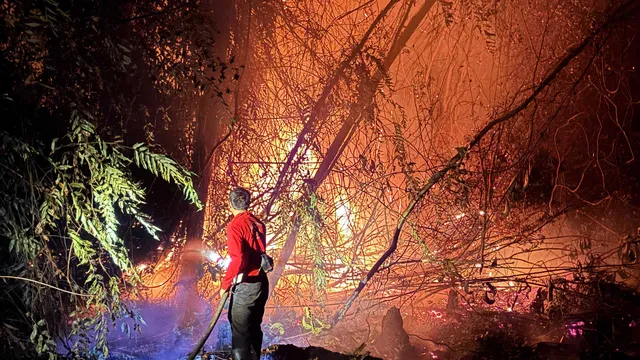
Indonesia’s wildfire crisis cannot be business as usual
Every wildfire season, I watch the smoke arrive. This year, the fires have gotten worse.
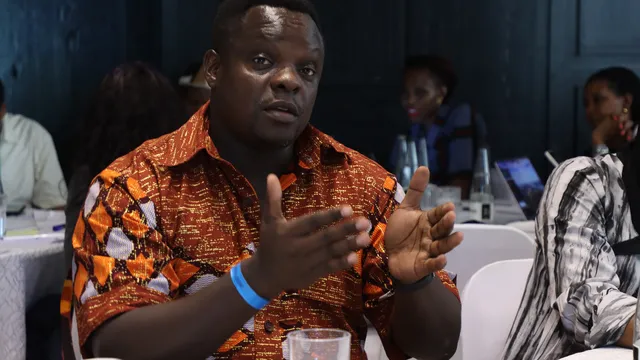
Why Africa's fight for Climate Reparations should question historical structural Injustices
Despite contributing under 4% of global emissions, Africa faces the worst climate impacts. At a symposium in Mombasa, Kenya, leaders call for historical polluters to pay $170 trillion in climate reparations, not as voluntary charity but a binding legal liability.
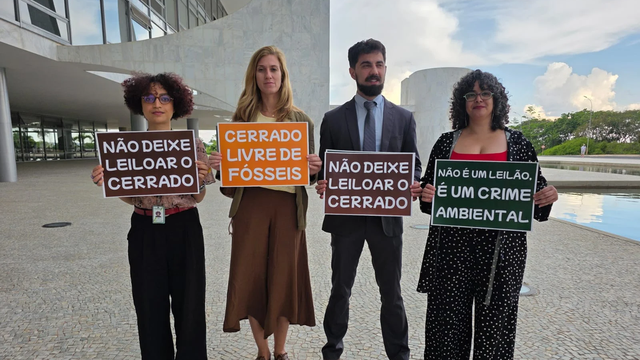
The Cerrado Is Not for Sale
Explore the upcoming gas auction in Brazil and its implications for Indigenous lands and the environment in Maranhão.
