
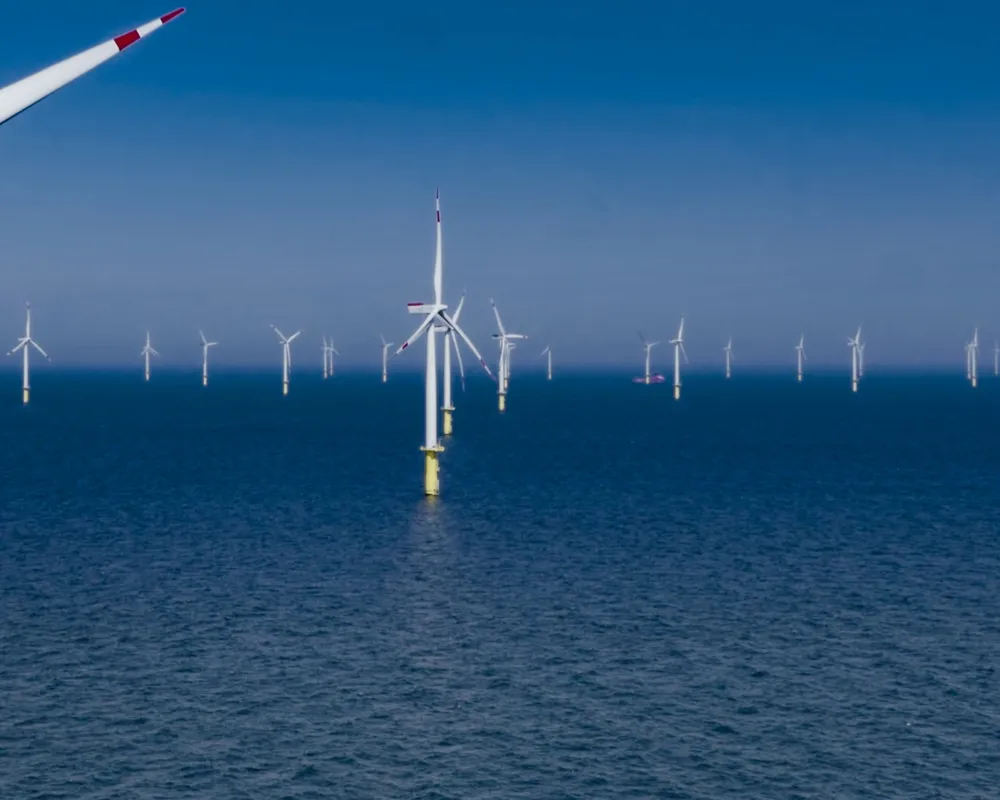
Authors: Andreas Sieber, Raky Sy, Victoria Kalyvas
What are NDCs?
Nationally Determined Contributions (NDCs) are countries’ formal pledges under the Paris Agreement to reduce greenhouse gas emissions. They are updated every five years to reflect rising ambition and provide transparency on how governments plan to meet global climate goals.
The current round of updates, ‘NDC 3.0s’, extend targets through to 2035, and is the first set submitted since the Paris Agreement’s Global Stocktake, which called for stronger sectoral targets. All countries are required to submit their NDC 3.0 by COP30, set to begin in Brazil on November 10th, 2025.
Renewables at the center
The NDC 3.0s submitted so far demonstrate that renewable energy is fast becoming the backbone of national climate strategies. These updated submissions offer a signal of whether governments are aligning their domestic policies with the 1.5°C Paris Agreement global heating threshold and the COP28 commitment to triple renewable energy capacity by 2030.
How many countries have submitted?
As of 19 September 2025, ahead of the United Nations Secretary General’s Special High-Level Event on Climate Action, 36 countries have submitted NDC 3.0s.
From these submissions, a clear trend is emerging: renewable energy is moving from the margins of climate plans to the mainstream of national ambition. Sixteen countries set higher or entirely new renewable-energy targets in their NDC 3.0s, nine countries did not raise targets but already have high renewable shares or ambitious goals, and 28 of the 36 countries support the COP28 pledge to triple global renewable capacity by 2030, and nine explicitly reference it in their NDC 3.0.
For a detailed breakdown, see the Annex table attached below.
Key Takeaways
- As of September 18th, 2025, 36 countries have formally submitted their updated Nationally Determined Contributions, climate targets that reflect their requirements under the UNFCCC to disclose their planned emissions reductions strategies through to 2035.
- Of these 36, 16 countries have included either a higher or new renewable energy target in their NDC 3.0 compared to their previous NDC submission.
- Of the countries that did not include a higher or new target in their NDC, 9 already had ambitious targets of 80% or higher renewable energy share in their previous NDC submission, or already have high renewable energy use nationally (over 75%).
- This means that 25 of the 36 formally submitted NDC 3.0s (roughly 70%) either set new quantitative renewable targets or already have ambitious renewable expansion policies in place or a high share of renewable energy in the grid.
- At COP28, Parties agreed to triple global renewable energy capacity by 2030. 28 of the 36 countries that have submitted NDC 3.0s have pledged support for this goal.
- Nine countries specifically acknowledged this goal in their NDC 3.0s.
Taken together, these submissions signal a decisive shift: renewable energy is no longer peripheral in climate plans but a central pillar of ambition for 2035 and beyond.
New and improved targets
- Sixteen countries set higher or entirely new renewable-energy targets in their NDC 3.0s. Examples include:
-
-
- Maldives: meet 33% of electricity demand from renewables by 2035 (up from 15% by 2030).
- Cuba: renewable share targets for 2035 around 2 percentage points higher than for 2030.
- Andorra: at least 80% of national electricity from renewables by 2030 (up 10 points).
- Kenya: 100% renewables by 2035.
- United Arab Emirates: increase renewable capacity from 3.7 GW to 19.8 GW by 2030 (a >500% rise).
- Singapore: raise imported renewable energy from 4 GW to 6 GW by 2035.
-
Building on existing ambition
- Nine countries did not raise targets but already have high renewable shares or ambitious goals:
-
- Canada: 90% non-emitting electricity by 2030.
- New Zealand: 100% renewable electricity by 2030.
- United States: 100% “clean” electricity by 2035 (renewables and nuclear).
- Brazil: already produces ~90% of its electricity from renewables, with some targets surpassed ahead of 2030.
- UK: >95% of generation from onshore/offshore wind, solar and nuclear by 2030.
- Barbados: fossil-free electricity and 95% renewables by 2035.
- Bolivia: 75% renewable electricity target by 2035.
- Marshall Islands: two-thirds renewable by 2030, on track for net-zero energy by 2050.
- Saint Lucia: 40% renewable by 2030 and at least 46% by 2035.
Alignment with global goals
- 28 of the 36 countries support the COP28 pledge to triple global renewable capacity by 2030, and 9 explicitly reference it in their NDC 3.0.
Compared with the previous round of NDCs, these new submissions represent a notable improvement in sectoral planning and accountability. According to the IEA, only 14 of 194 ‘NDC 2.0s’ included an explicit 2030 renewable power target, whereas a majority of submitted NDC 3.0s include measurable renewable goals.
Why this matters for COP30
While further NDCs are expected, and gaps do remain, the current submissions signal an important trend: governments are treating renewable energy as an essential component to meeting the Paris Agreement, responding to the Global Stocktake, and accelerating climate action. This momentum should inspire hope in the climate movement, and is momentum that must be harnessed and strengthened as we approach COP30.
A country-by-country breakdown of renewable energy targets and policies is provided in the ANNEX here.
Related blogs
News, stories, and insights from the global climate movement.
African Symposium on Climate Reparations
Africa is on the frontlines of a climate crisis it did not create. True climate action requires more than promises - it demands accountability, equity, and repair.
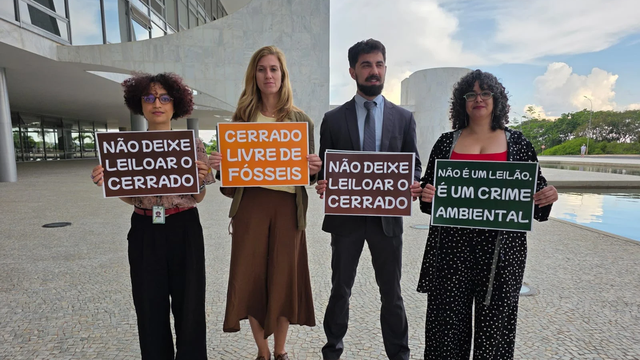
The Cerrado Is Not for Sale
Explore the upcoming gas auction in Brazil and its implications for Indigenous lands and the environment in Maranhão.
Keeping Safe from Fires and Liars
Explore the connection between climate crises and disinformation as experts discuss current challenges and their impacts.
