
This is a guest blog by Tom Ellison, Deputy Director, Center for Climate and Security (CCS), a research institute tackling systemic climate and ecological security risks, and Phil Newell, Communications co-chair, Climate Action Against Disinformation (CAAD), a global coalition of over 50 leading climate and anti-disinformation organizations dealing with climate misinformation and disinformation.
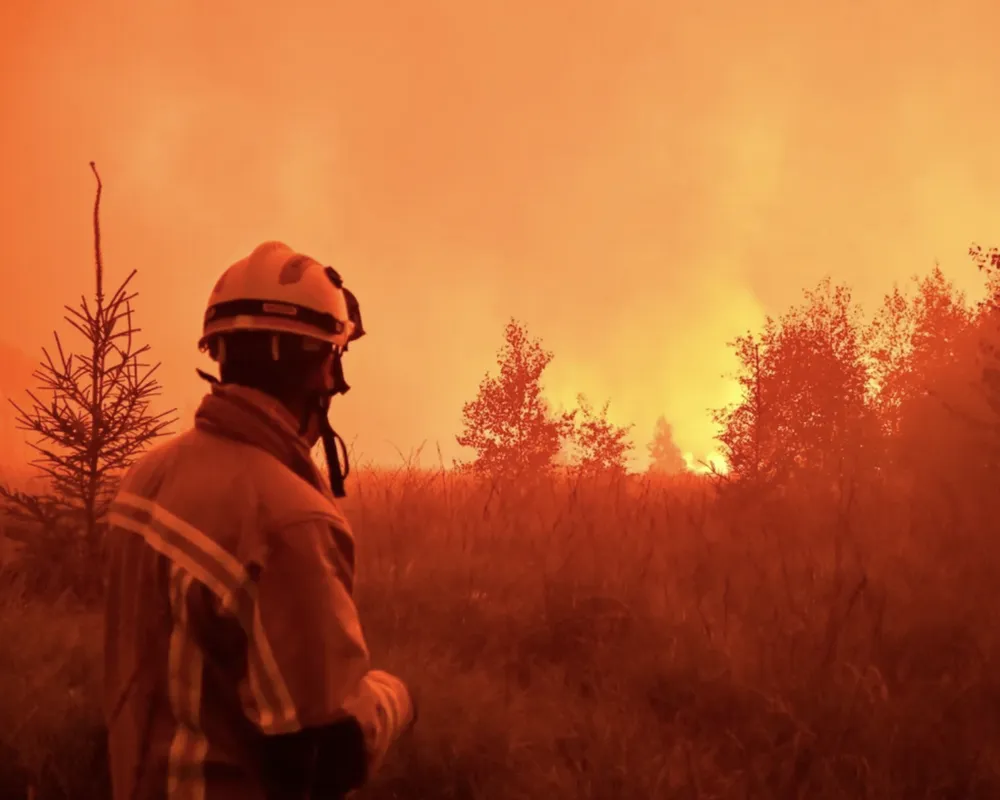
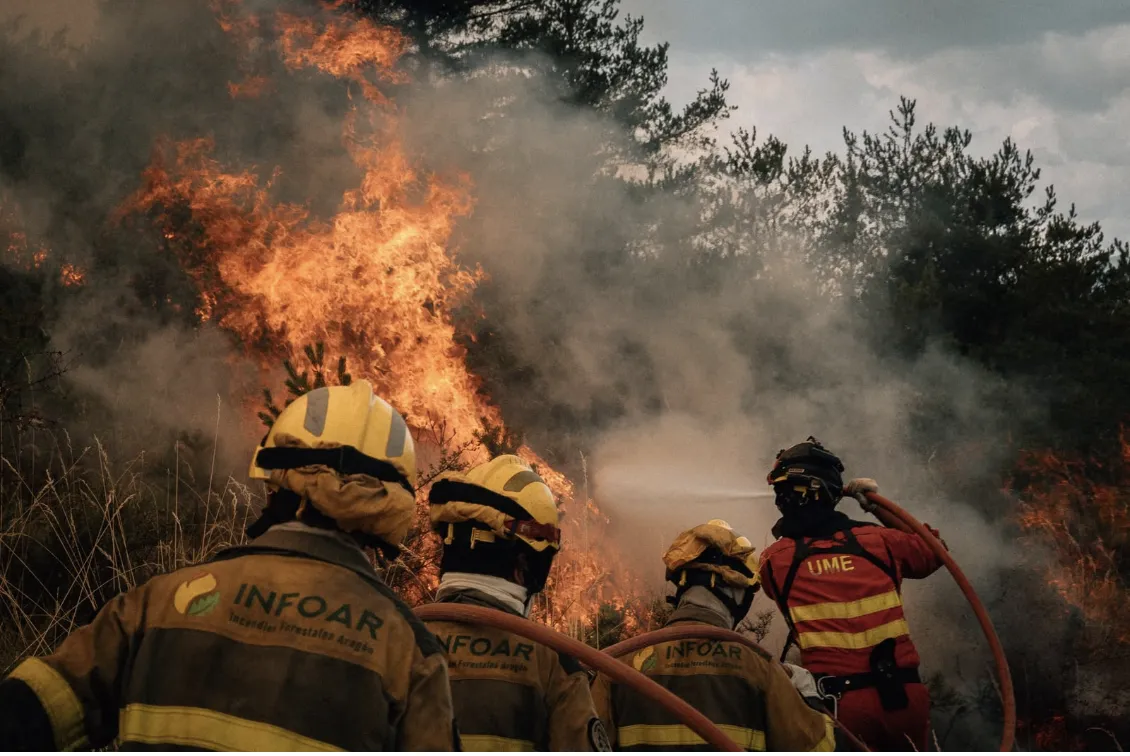
This past summer’s extreme weather has brought home the intensity of the climate crisis for many of us around the world: from the catastrophic floods in Nepal, to the lethal heatwaves across Europe and India, to the choking wildfires in North America, France, and Spain.
As if that isn’t enough, we are seeing these extreme weather crises going hand-in-hand with information crises. The danger of heatwaves is being downplayed. Flooding is getting blamed on foreign neighbors. Wildfires are being attributed to a land-clearing conspiracy. As fossil-fueled extreme weather continues, it is also fueling an information crisis, bringing climate denial, AI slop content, political propaganda, extremism, and online rage bait. This has ramifications that endanger lives, divide societies, and undermine climate action.
We must protect ourselves and those around us not only from the physical impacts of extreme weather but also from the disinformation that comes with it. The good news is, we can keep ourselves safe by anticipating and short-circuiting lies and distortions. A new toolkit ‘Weathering Extremes,’ by Jennie King from CCS lays out some practical steps forward:
Understanding the Threat
Wildfires, floods, and other extreme events bring a host of problematic claims and narratives. Experts sometimes talk about false information that is spread knowingly (disinformation), or false information spread unknowingly (misinformation), or even cherry-picked facts that are spread to manipulate (malinformation). But the most important thing is the impact this kind of information has, not the mindset of the person clicking “share.”
In the wild, we might encounter three main categories of deception around extreme weather. These can look different from traditional denialism in climate debates. But they have a variety of harmful impacts.
- The first category is environmental, which attacks science or cherry picks facts to separate a disaster from its climate-related causes. To use wildfires as an example, this could mean saying this wildfire was started by an arsonist, not climate change. That may be true, but it obscures the fact that climate change is making wildfires more likely and intense, regardless of how they start. Over time, this can weaken our understanding of climate change, and slow down climate action.
- The second category is political, which attacks disaster response efforts, often to grind an unrelated partisan or geopolitical axe. For example, Russia falsely claimed the wildfire wouldn’t have been so bad if the US hadn’t wasted resources supporting Ukraine, or the US President misleadingly argued that the LA wildfires are the fault of his political rival’s water policies. These claims can polarize governance, undermine disaster relief or recovery, or empower authoritarian leaders.
- The third category is hateful and extremist, which blames disasters on minorities or promotes conspiracy theories. These deceptions might look like the wildfires were caused by Jewish weather control or that foreigners are stealing all the disaster aid. Such falsehoods can divide societies or endanger the safety of vulnerable people.
The Perpetrators and Motives
These claims are mostly about directing blame, whether to “natural” causes, to conspiracies, to minorities, to political rivals or foreign enemies–basically, anything but climate change. So what is really behind the lies? It comes down to money and power that vested interests have on the line during chaotic, viral climate disasters.
Big Oil & Big Tech
Private interests have a great deal of money to protect or gain from high-profile extreme weather events. Most obviously, oil, gas, coal, animal agriculture, and other polluting sectors don’t want disasters to motivate climate action that threatens their profits. The role of corporate lobbying, advertising, and PR in climate disinformation and on climate obstruction, i.e. creating doubt on the severity of the climate crisis has been documented for decades. But more recently, the interests of Big Oil are increasingly aligned with those of Big Tech.
Social Media Algorithms
Once upon a time, social media promised an open shortcut for connecting with other people, be they friends, family, or strangers. But along the way, social media became a stew of addictive algorithms, with users forever scrolling in circles, where attention is sold to advertisers rather than browsing an open web. Now, online conversation around disasters favors whatever earns clicks and cash– whether it’s rumors, rage bait, AI slop, propaganda, or hate speech. As a result, the social media channel for public engagement has been hijacked by dishonest influencers, polluters, and bots. That leaves policymakers and the public struggling to find reliable information during disasters, right when they need it most.
Political Ideology
Besides money, disinformation about extreme weather is also motivated by ideology and politics. Authoritarian governments see extreme weather as a chance to attach their message to a major news event and to undermine opponents and critics. Political extremists, especially the far right, have started treating climate change not just as an energy debate but as an enemy cultural identity. These actors are not the cause of our toxic information environment, but exploit and shape it to serve their goals.
Often, all these motives are mixed. For example, Russia has covertly sponsored far-right climate ‘disinfluencers’ in the United States, and the state-owned gas company owns Russia’s largest media conglomerate, showing how directly fossil fuel interests, social media, and global politics are intertwined.
What Can We Do?
There are ways we can protect ourselves and our communities from these threats:
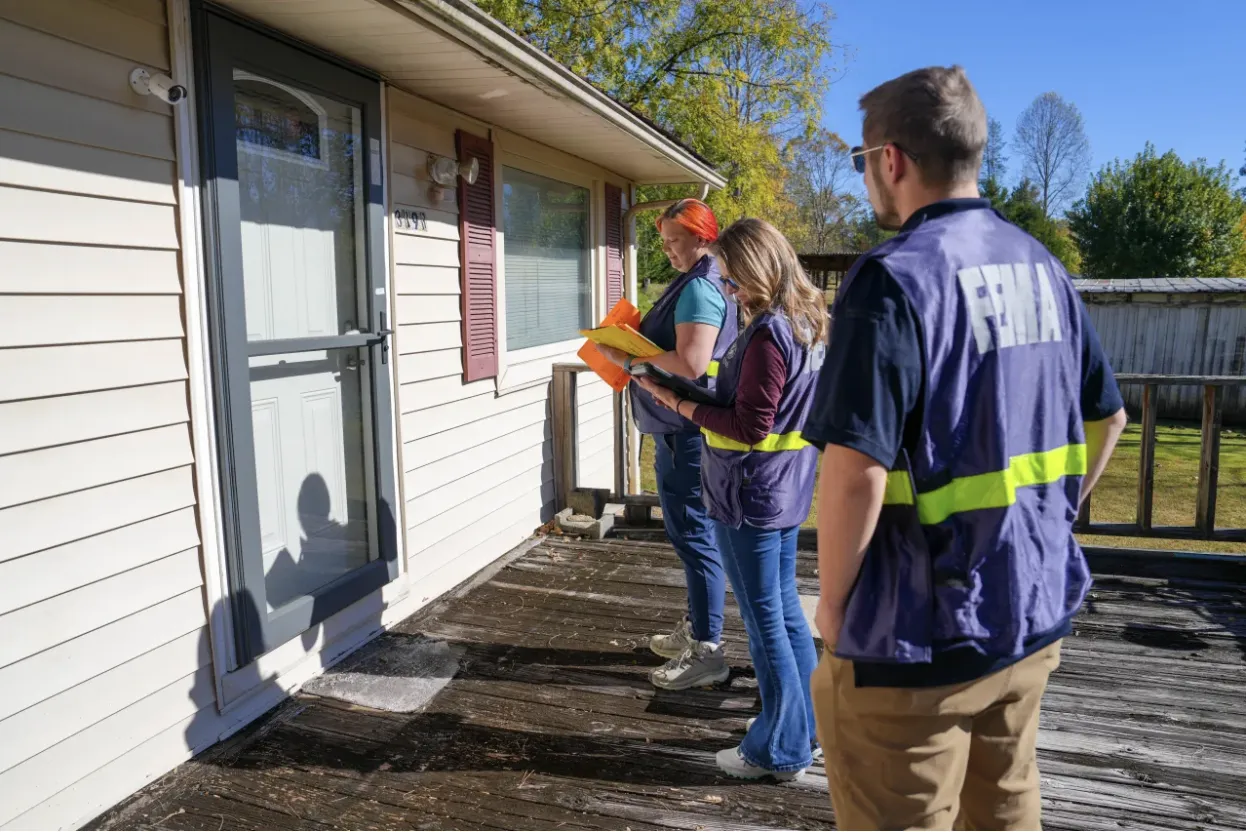
- We as communities and climate concerned citizens should expect disinformation during extreme weather as the rule, not the exception. Unfortunately, these information crises can happen anywhere, as local events are co-opted into viral narratives. By reading this and the resources here, you are already ahead of the curve.
- Second, we need to sidestep the algorithm and not rely only on social media. It’s tempting to focus all our energy online, but social media tends to reward lies and nonsense over truth. As Jennie King writes in Weathering Extremes, “information resilience is built on networks, not newsfeeds.” That means real-world connections matter – personal relationships, ties with local governments, or simple tools like email lists, phone trees, and group texts – that we can build before a disaster strikes. And it’s worth remembering: as Yale’s Climate Maps show, most people in the U.S, for example, support key climate actions – even if you’d never guess that from social media.
- Third, we can build defenses ahead of time, rather than scrambling to counter or fact-check every rumor and lie during a crisis. One way is “pre-bunking”– warning people in advance about certain narratives, messengers, or tactics they are likely to run into. In fact, the disinformation examples earlier in this piece are themselves a form of pre-bunking. Another tool is the “truth sandwich” – leading with the truth, then knocking down a false claim or bad source, before reiterating the facts again. We can also work to get accurate information into the data AI chatbots learn and draw from – also called “generative engine optimization”. This is increasingly important as AI use grows, and because cunning governments and companies are already trying to feed their own messages into chatbots.
A resource on prebunking and generative engine optimization, from Weathering Extremes: A Toolkit for Information Resilience Amid Disaster (CCS).
- Finally, as citizens and civil society, we can push for the global, systematic reforms needed to make our online environment more trustworthy. Reforms that call for improved safety, transparency, privacy, and accountability standards for tech platforms endorsed by CAAD are a great starting point, and at will unwind some of the toxic incentives that give lies and outrage the upper hand.
Toward Information Resilience
Climate change and disinformation are two of the systemic challenges of our time, and they are colliding in harmful ways. Neither will be solved easily. But more people and institutions globally are tackling the challenge, from the UN to researchers to certain governments. Ultimately, reliable information is just as much a part of necessary climate infrastructure as is solar and wind power or flood defences. And everyone has a part to play from newsrooms to social algorithms and even family group chats.
References and resources:
Related blogs
News, stories, and insights from the global climate movement.
Indonesia’s wildfire crisis cannot be business as usual
Every wildfire season, I watch the smoke arrive. This year, the fires have gotten worse.
African Symposium on Climate Reparations
Africa is on the frontlines of a climate crisis it did not create. True climate action requires more than promises - it demands accountability, equity, and repair.
The Cerrado Is Not for Sale
Explore the upcoming gas auction in Brazil and its implications for Indigenous lands and the environment in Maranhão.
