
We worked hard throughout FY24 to bring our vision of a fair energy future to life — one that is clean, accessible, and affordable to everyone. We believe we need new energy systems that are powered by the sun and wind, not by coal, oil and gas, and that are rooted in local needs: respecting cultures and traditions, creating jobs and income, supporting communities to grow and thrive, and protecting both people and nature.
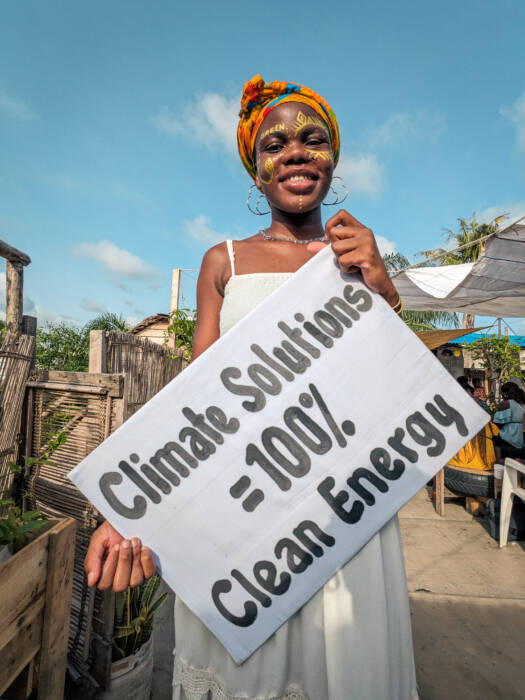 We did this in many ways. We spoke up at international meetings, pushed governments to create better energy laws, and demanded fair and fast climate funding. These big actions are important — and they’re often what people see the most.
But a lot of our work happens behind the scenes: helping local groups identify where action is most impactful, planning strong actions, giving them training and tools, and building powerful networks. In short, we’re helping shape the future of the climate movement, making it stronger, smarter and more connected. The Our Own Power Network is a great example of our vision in action.
As we expanded our strategy from stopping fossil fuels – the cause of the climate crisis – to also pushing for real and fair energy solutions, we saw something was missing. People all over the world were excited about clean energy and working on local projects. But many of these efforts were happening alone, they weren’t connected to each other – and their success stories weren’t travelling far enough.
Our first step towards closing this gap was to create “Our Own Power”. This free toolkit is the result of working closely with local activists and communities around the world. The toolkit, available in five languages, gives step-by-step advice on how to start renewable energy projects, get funding, work through local rules and achieve lasting wins. It also shares real stories from communities who are already putting all those learnings to practice. So far, almost 40,000 people have visited the website, and 14,000 have downloaded the toolkit, mostly from countries in Africa, Latin America and Asia – places that are often most impacted by climate change, even though they have contributed the least to causing it.
The toolkit marked the start of our building a strong, connected Our Own Power Network. This new global network, officially launched in early September 2024, offers an invitation to groups working with clean and fair energy solutions to the climate crisis. More than 200 people joined us for our first online meeting, and by the end of that month, 89 groups had become part of the network – including farmers’, women’s, faith and youth groups.
And the network kept growing fast since then!
Our Own Power gives communities the tools, training and global support they need to shift from fossil fuels to clean, local energy. It’s about reimagining what’s possible: a future where energy comes from the sun and the wind and is controlled by people, not corporations. Together, we are building a movement to make a clean energy future a reality.
As a young woman from a small island who is actually seeing the impacts of climate change in my daily life, I often felt powerless because I felt like I had no control over these uncomfortable things. With the Our Own Power Network, the community has given me a reinvigorated appreciation for the strength and resilience of people who face adversity and adapt to it. We can learn together and take action for the better tomorrow we all want!
– Katrina Khan-Roberts, @TnTClimate, Trinidad and Tobago
The Our Own Power Network is the best place to share practical experience on how communities get their power back, acquire innovative skills, and get started on community-led renewable initiatives. It is amazing how much knowledge sits with this community, just waiting to be tapped or co-created in the sessions!
– Peter Owiti, Wote Youth Development Projects, Kenya
Being part of the Our Own Power Network has given me a crucial perspective on how community energy can work in different parts of the world. It also helps me understand the power struggles that communities face in our current economic system, with concrete stories and examples.
– Chris Vrettos, REScoop.eu, Greece
This is a story from 350.org’s 2024 Annual Report