
This newsletter is also available in French.
Today marks 10 years since the ParisAgreement, when for the first time world leaders agreed to limit global warming to 1.5°C and to drive a rapid transition away from fossil fuels. And it feels like the world is turning a page, with some of it finally being in the right direction.
Exactly a month ago, world leaders gathered in Belém, Brazil for #COP30 the annual UN climate summit where governments make important decisions on climate action While the talks were far from perfect, something major happened. People powers shone through. From organizers, Indigenous and Traditional Peoples to youth and workers, everyday people showed up to put pressure on leaders and this led to some pretty historic progress:
In Colombia, the government declared its entire Amazon a fossil-free zone, a monumental step for Indigenous rights, forest protection, and global climate justice. The country will also host the world’s first International Conference on the Just Transition Away from Fossil Fuels next year – a space that simply didn’t exist until climate movements and frontline communities demanded it.
COP30 host, Brazil, too took its first official step a few days ago, towards developing a national roadmap to phase out fossil fuels and open the door for communities to finally shape the country’s energy future.
You’ll read more about the impact people and our movement had inside and outside the COP30 negotiations, in the next section. But for now, I want to say this: These are not small shifts. They’re signs that the world is finally beginning to move in the direction people have been pushing for decades: a future where forests are protected, polluters are held accountable, and clean energy becomes a right, not a privilege.
So as 2025 ends, we’re feeling something rare: momentum. Real, global momentum led by everyday people who refuse to give up.
And for 2026? We have big, exciting work ahead and we’re glad you’re in this with us.
Wishing you rest, warmth, and hope this holiday season.
Sign up for our newsletter to get these updates first!
Movement Updates Discover our latest actions demanding climate solutions & energy justice
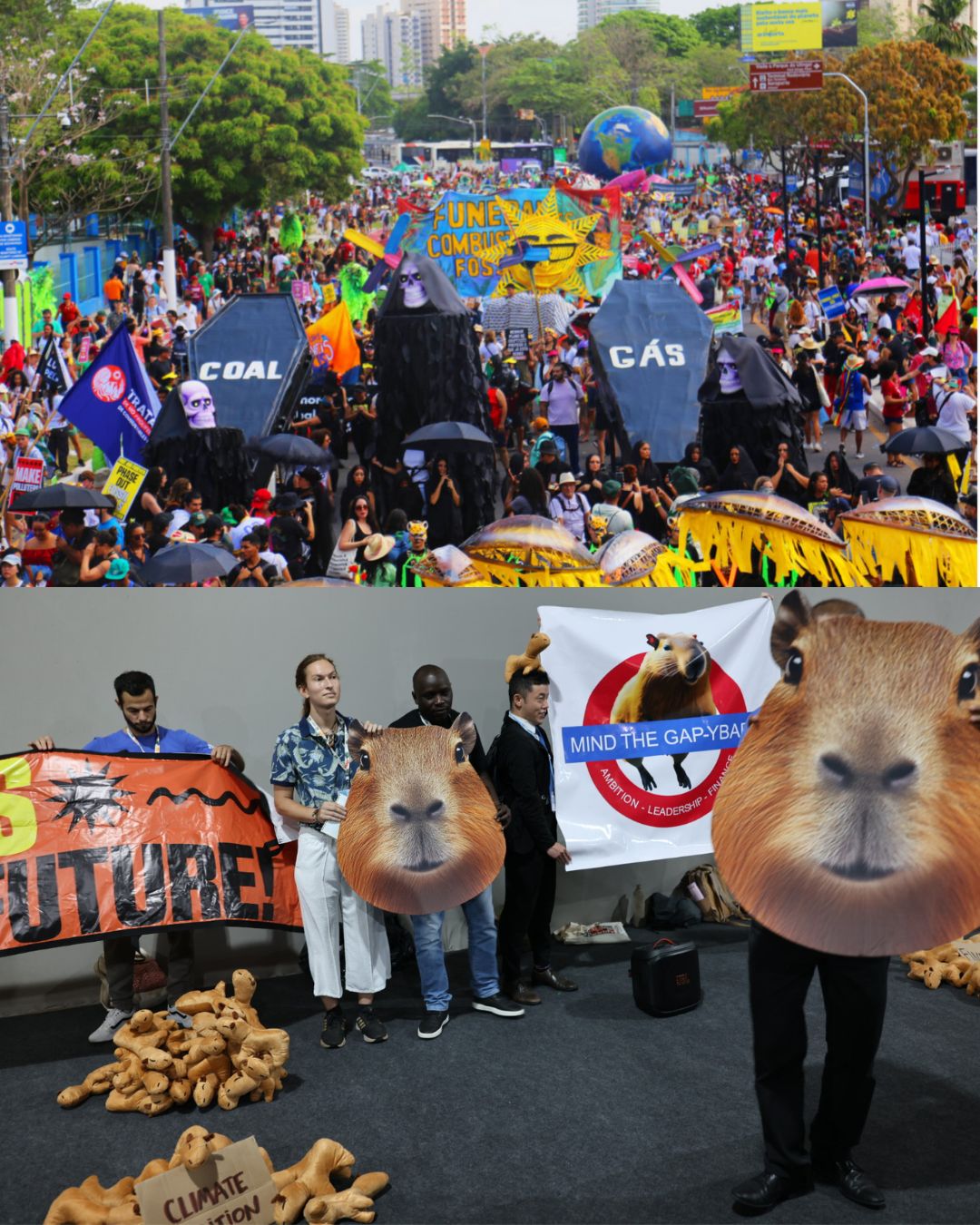 People power set the climate agenda at COP30
At this COP, it was the people, not politicians, who shaped the talks. For two weeks, Belém, pulsed with marches, music, and creativity as civil society turned this host city into a living call for climate justice. More than 70,000 people joined the People’s March for Climate Justice, carrying a symbolic funeral for fossil fuels, while over 200 boats transformed the Amazon River into a moving protest. Inside the UN “Blue Zone,” banner drops and our capybara action kept pressure high, reminding leaders of a simple truth: communities want rivers, not pipelines and a transition that serves people, not polluters.
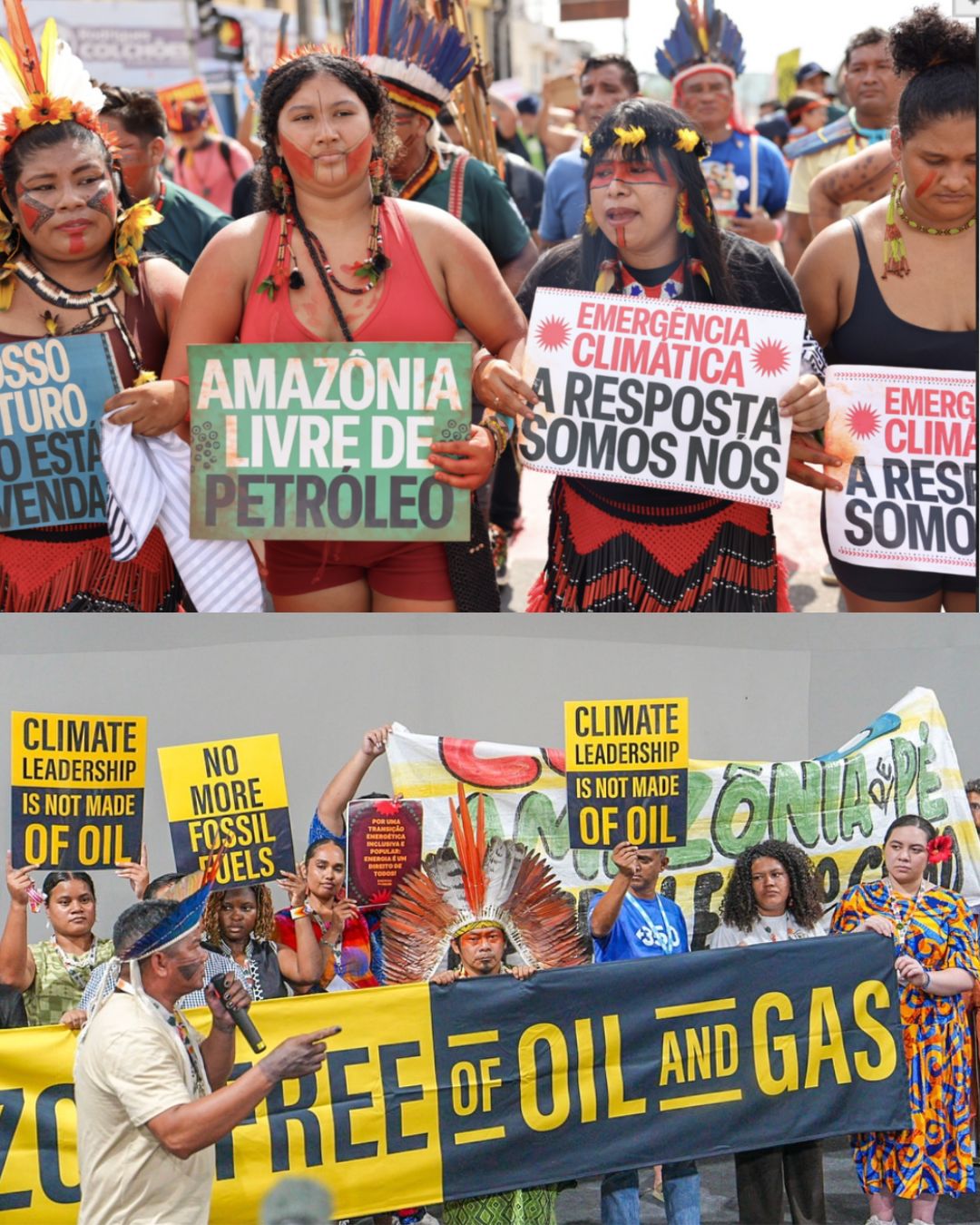 Indigenous voices, stories, and solidarity took center stage
For the first time in years, COP felt rooted in land, culture, and lived experience with one of the largest Indigenous delegations in history of 3,000 representatives. We helped lift frontline leadership through powerful marches and story-driven actions like Amazon Free of Oil and Gas ritual and the premiere of the documentary Dear Ancestors from the Amazon, the Pacific, and so-called Canada — reminding leaders that climate action is about memory, identity, and protection of home. This surge of movement power helped secure the demarcation of ten Indigenous territories, a historic step for land rights and forest protection, strengthening the push for community-led renewable energy and Indigenous participation in every climate decision.
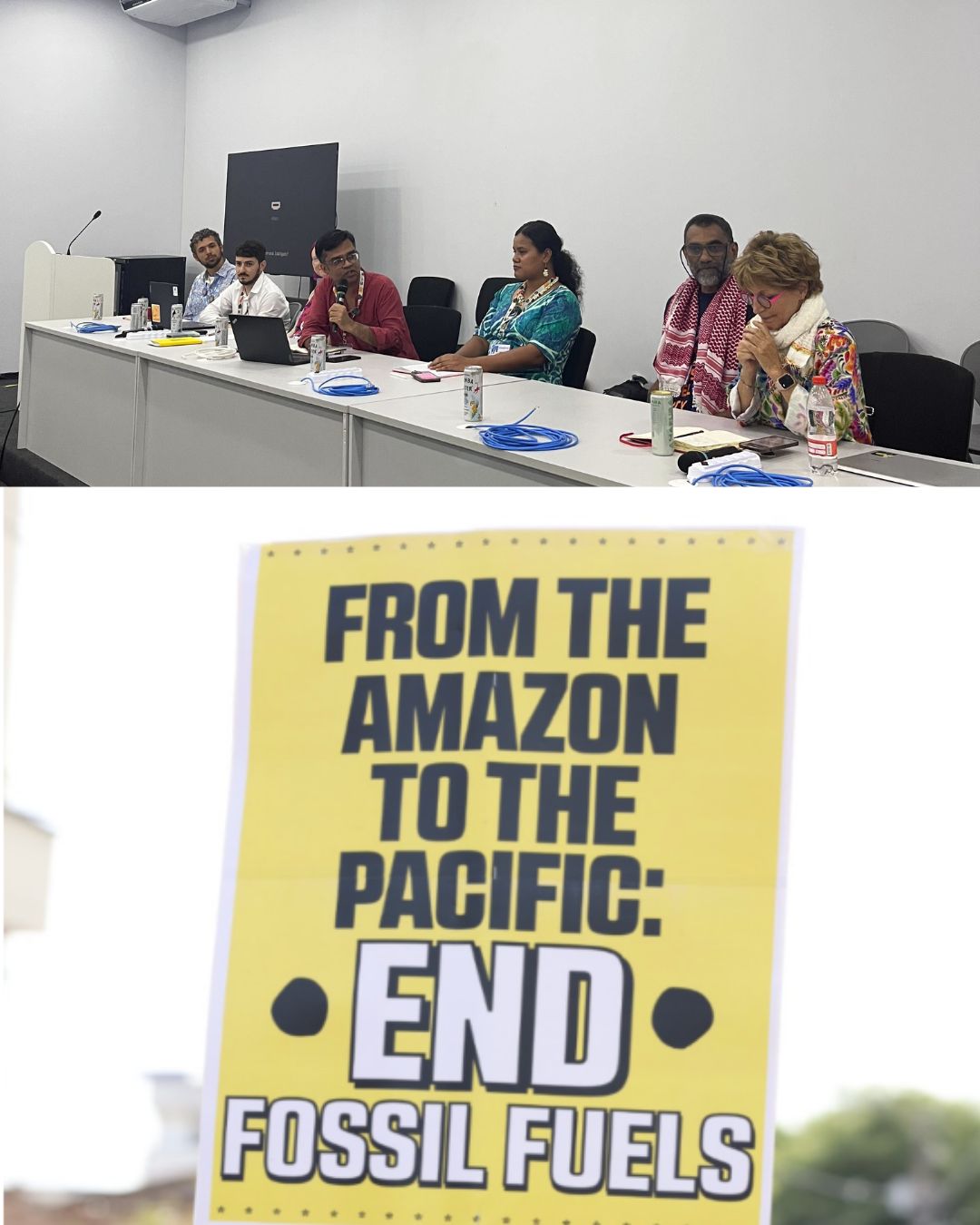
We pushed governments toward real and inclusive climate action
We worked tirelessly with partners to shift negotiations toward justice: demanding climate finance that protects people, not polluters and exposing the harm of fossil fuels. We drove momentum for the Transition Away From Fossil Fuels roadmap (TAFF), laying out how countries can wind down coal, oil, and gas in line with climate science, which gained support from almost 90 countries, although did not make it to the final text. Our advocacy did secure a major win: the Belém Action Mechanism (BAM)—a new just-transition framework centering workers, Indigenous Peoples, and frontline communities, now sits in the final CO30 text.
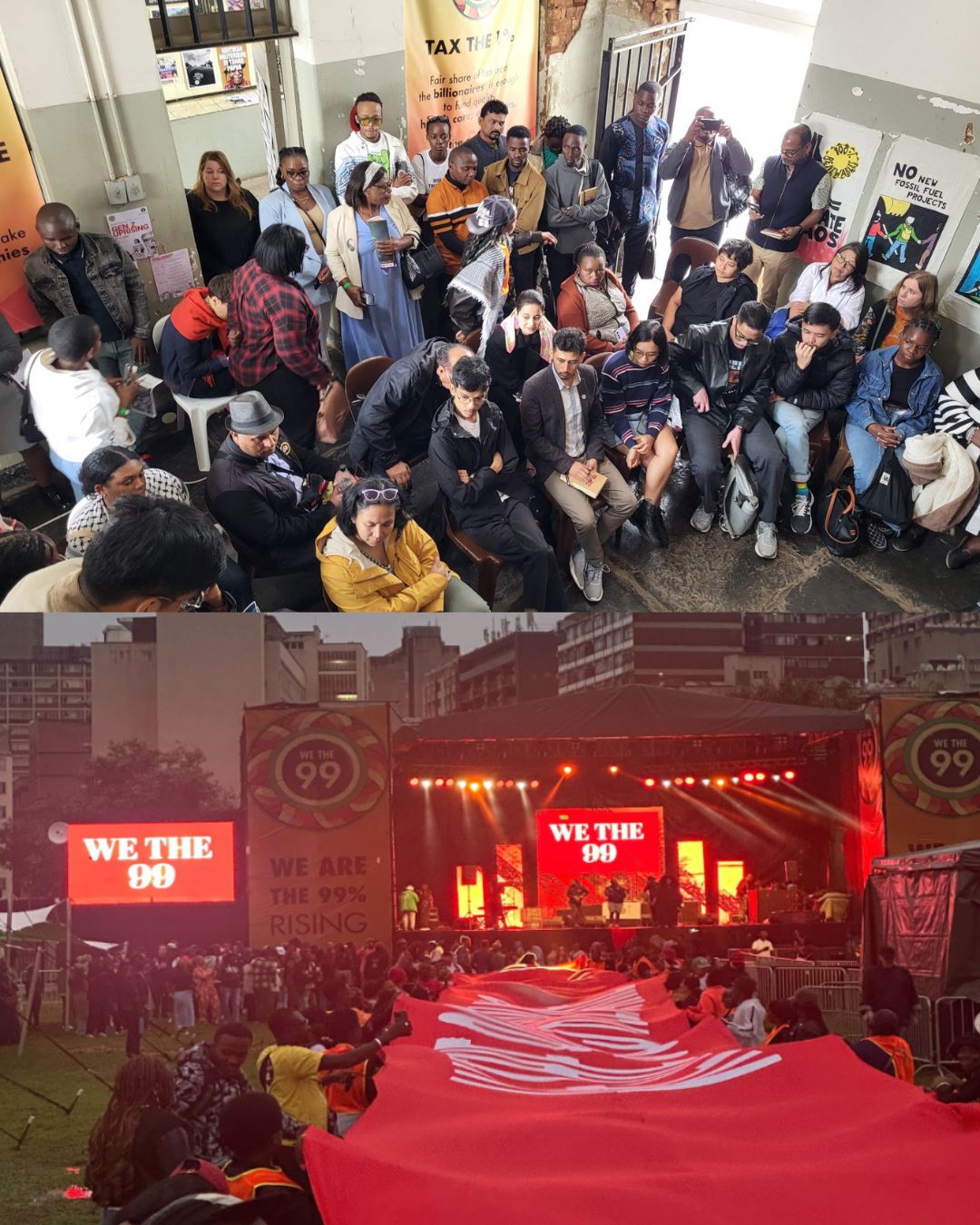 People’s power also met the G20 in South Africa
Alongside COP, the G20, a forum where the world’s biggest economies set global priorities, gathered in South Africa, meeting for the first time on African soil. So under We The 99%, we united workers, students, activists, and artists (the 99%) to demand climate justice, debt relief, and a fast, fair shift to renewables. Through town halls, workshops, open letters, a People’s Summit, and a mass uprising festival, we put civil society at the centre of this moment. While leaders launched the Africa Engagement Framework, a plan to deepen cooperation between the G20 and African governments on development and finance, they failed to commit to a fossil fuel phase-out, meaningful debt cancellation, or real climate finance. But we stand unwavering in our demands: Africa needs resources and justice to shape its own renewable future.
Climate Jargon Unpack the terms & concepts being used by climate activists & experts
BAM! (Belém Action Mechanism)
BAM is a new UN climate framework that makes sure the shift away from fossil fuels is fair by protecting workers, Indigenous Peoples, and frontline communities as the world transitions to clean energy.
Everyone at COP30 was talking about it. From badges to banners, “BAM!” became the rallying cry across the UN climate talks, a demand led by workers, Indigenous leaders, and climate justice groups who insisted that the energy transition must be fair, not harmful. Halfway through COP, countries representing about 80% of the world’s population signaled support for a just transition mechanism, building huge momentum.
The win: COP30 delivered and BAM was officially included in the final text. It means the UN now recognizes that climate action must center fairness, decent jobs, community protection, and Indigenous rights, alongside emissions numbers.
Why it matters: Until now, a “just transition” was mostly a promise on paper. Everyone agreed it was important, but no one was required to track progress or support communities through the shift. BAM changes that. It creates a formal space within the UN climate system to:
- coordinate global action on just transition,
- share best practices,
- track whether countries are keeping their promises, and
- help ensure support goes to those who need it most.
BAM turns justice from a slogan into a system. It’s a major step toward a transition that is fast and fair, and one of the biggest victories won by people at COP30.
Community Spotlight Be inspired by stories & interviews of real people who are fighting for a just energy transition
Activist Spotlight: Bianca Barbosa da Silva
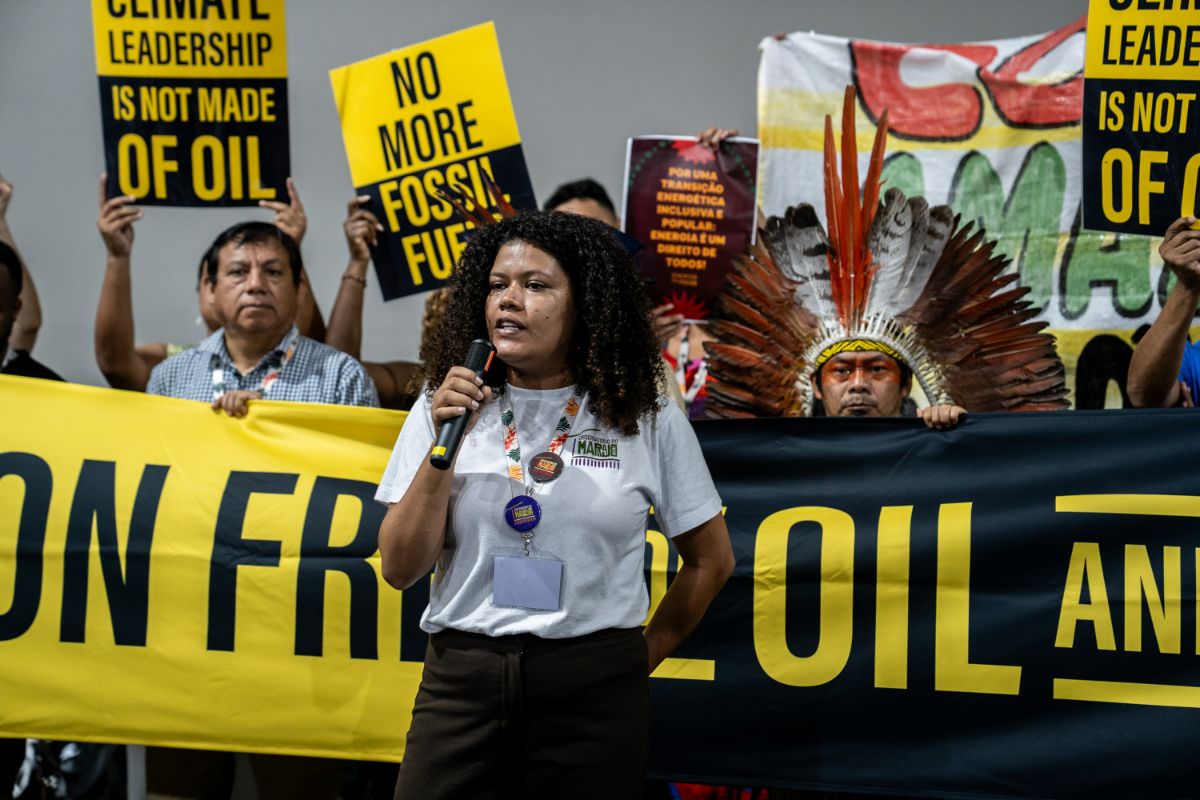
Bianca Barbosa (pictured above) is a biologist, Quilombola activist, and grassroots leader from the Mangueiras community in Marajó Island, deep in the Brazilian Amazon. This is a region where power outages can last days and energy insecurity shapes daily life. Growing up, Bianca learned early that defending land is defending life. Today, a project manager at the Marajó Observatory, she works to ensure that communities like hers have a real voice in decisions about energy, climate, and territory.
Bianca is a driving force in 350.org’s Energia dos Povos (Energy of the People) campaign, which has already trained more than 1,500 people across 71 communities to fight for clean, reliable, community-led energy. Her advocacy has helped secure major advances: from infrastructure repairs to inclusion in social electricity tariffs, and even the rollout of 10,000 solar systems across the Amazon.
For Bianca, energy justice is climate justice. And her message to policymakers remains simple and powerful: “Nothing about us without us” meaning that the energy transition must start with the people who keep the forests standing.
Renewable Rundown Get informed on big numbers, key facts and important news
No fossil fuel growth in 2025
For the first time in history, the world is on track for zero growth in fossil fuel generated electricity this year. Not because demand for electricity is falling, but because renewable energy is growing fast enough to meet all new electricity needs.
Two new, major reports explain this shift. The first, from Ember, a global energy think tank, shows solar grew an astonishing 31%, with wind close behind. Together, they covered the world’s soaring power demand, leaving no space for fossil expansion. Even in China and India, usually the biggest fossil users, fossil generation fell, replaced by record clean energy growth.
The second comes from the International Energy Agency (IEA), one of the world’s most influential energy bodies. Its latest outlook shows solar and wind rapidly outpacing fossil fuels, with clean power now cheaper, more reliable, and expanding fastest in emerging economies.
The message is clear: the fossil fuel era has peaked, and the renewable era is accelerating.
Learn more here.
Your Power Support us in demanding real climate action
This year, you helped power a global movement, from landmark trainings to worldwide mobilizations and bringing Indigenous leadership to the heart of COP30. Together, we won big in one of the hardest years yet.
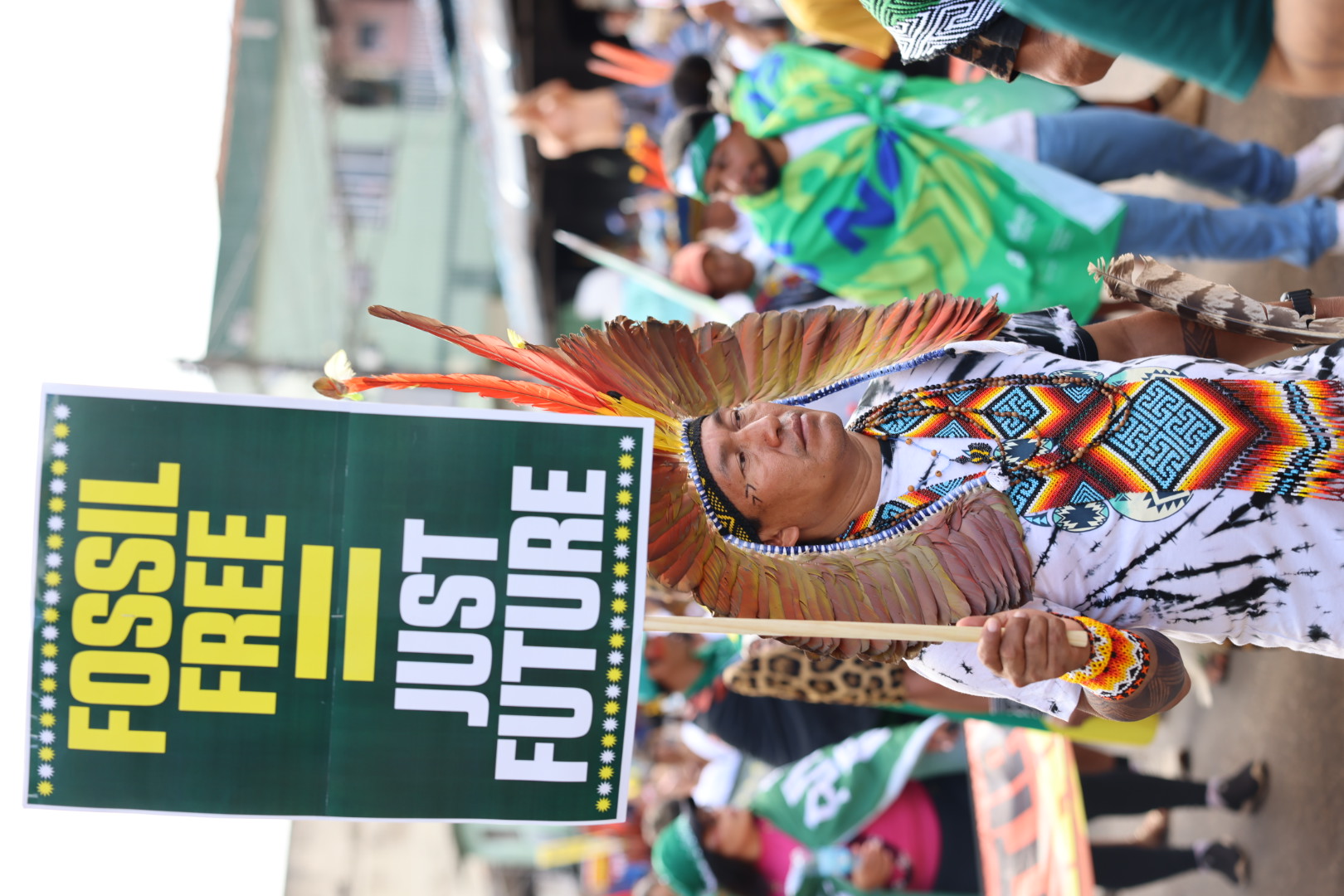
But while we’re rising, governments and corporations are backtracking, and funding for climate action and a fossil free future is shrinking fast. We need your support to keep this work alive.
Energize Build your skills to tackle the climate crisis and widen our movement
It’s that time of the year again – holidays that bring good food, long chats, and… the occasional tricky conversation. Whether it’s a climate-skeptical uncle, a friend who feels overwhelmed, or someone who genuinely wants to understand what’s happening, these moments are chances to connect, not confront.
To help, we’ve created a short, practical training called Having Climate Change Conversations, with a simple four-step approach you can use with anyone. Have a look: it’s quick, it’s clear, and it turns overwhelming topics into meaningful dialogue rooted in care.
