
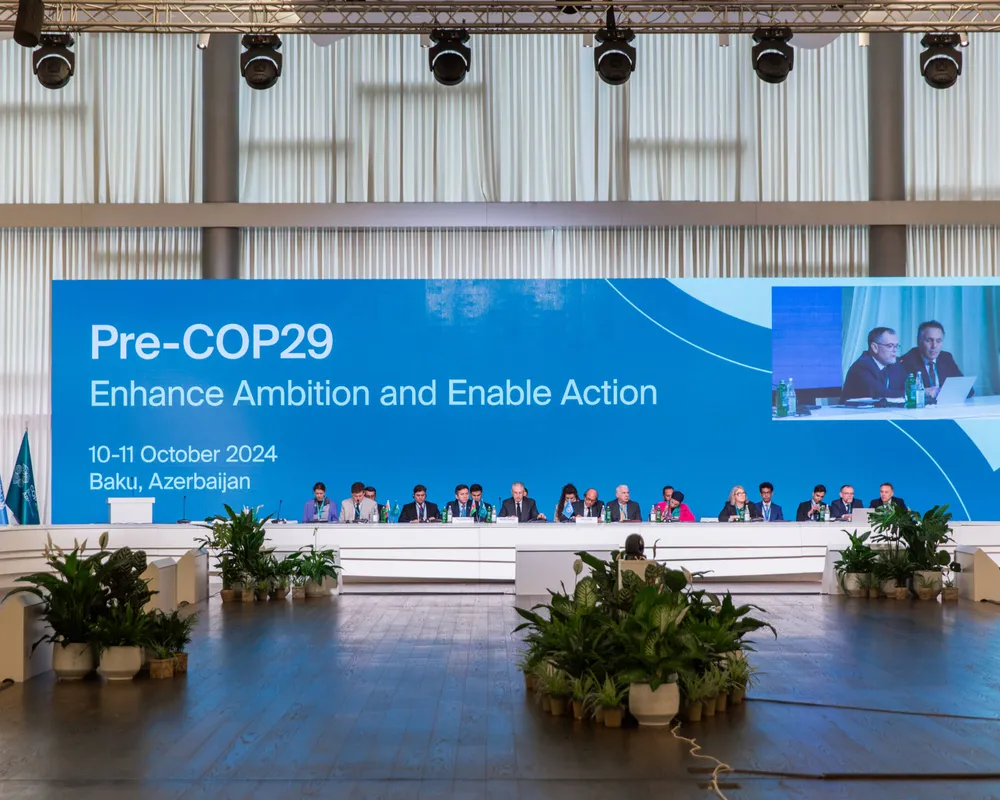
As of 10 March 2025, 19* countries have submitted their updated five-yearly climate action plans, one month after the initial submission deadline. The plans, known as Nationally Determined Contributions (NDCs) outline their climate commitments through 2035. They are also called NDCs 3.0 since they are in their third iteration.
These submissions are a welcome development, showing us that countries are serious about tackling the climate crisis. But the key question remains: Are these commitments bold enough to tackle the climate crisis? Or is this just another round of “too little, too late” promises?
Please note: This report combines renewables and nuclear energy, but
. We view new nuclear as a dangerous distraction in the race to solve the climate crisis—it is too slow to build, excessively expensive, and fraught with risks, especially when compared to clean, safe, and rapidly deployable renewable energy solutions.
New research by 350.org, produced in collaboration with Zero Carbon Analytics, reveals a promising trend. The majority of these countries are increasing their renewable energy ambition:
1. Countries are starting to turn up the heat on renewable energy
Renewable energy is making its way into the majority of the submitted NDC 3.0s. A total of 15 out of 19 countries have included either specific renewable energy targets or outlined plans to ramp up renewable generation significantly:
For example, here are some ambitious pledges:
- The UK has pledged to have onshore wind, solar power, offshore wind (and nuclear energy) generate at least 95% of Great Britain’s electricity by 2030.
- The Marshall Islands are projected to reach two-thirds renewable energy share by 2030, in line with their long-term strategy that aims to achieve net zero energy systems by 2050.
- Saint Lucia aims to achieve a 40% renewable energy share by 2030 and at least 46% by 2035.
- The UAE has set a target of increasing renewable energy capacity to 19.8 GW by 2030, from a current level of 3.7 GW – an increase of more than 500%.
- Singapore aims to increase imported energy from renewable energy sources by a third, from 4 GW to 6 GW by 2035.
- The USA aims to achieve 100% clean electricity by 2035, including renewables and nuclear.
2. New and improved targets
Of the countries that have submitted their NDC 3.0s, seven have set new or more ambitious renewable energy targets compared to their previous submissions. Four countries included a new renewable energy target for 2030 and three raised their existing targets, and the UK has indicated a new target for all ‘clean energy’. These countries are not just tweaking around the edges—they’re making bold moves:
- The Maldives has set a target to meet 33% of electricity needs from renewable energy sources in 2035, more than double the share in its 2030 target, submitted in 2020, of 15% electricity generation from renewable sources by 2030.
- Cuba set renewable energy share targets approximately two percentage points higher than their 2030 targets, for 2035.
- Andorra has updated its target, requiring national electricity production to come from at least 80% renewable sources by 2030, up by ten percentage points from the previous target.
3. Sticking with what works: existing high ambitions
Then there are the countries that didn’t raise the stakes this time around but have existing ambitious renewable energy targets. Four have already pledged for renewables and other ‘clean’ sources to comprise over 90% of electricity generation by 2030 or 2035 in previous NDCs or other national policies:
- Canada aims to achieve 90% non-emitting electricity generation by 2030.
- New Zealand has set a goal of 100% renewable electricity generation by 2030.
- The USA aims to achieve 100% clean electricity by 2035, including renewables and nuclear.
- Zambia aims to increase its 2019 installed renewable capacity by 85% by 2030,
Five of the countries already generate over 75% of their energy from renewable sources:
- In New Zealand, around 88% of the grid is powered by renewable energy.
- In Uruguay, 91% of electricity generation comes from renewable sources.
- Ecuador produced over 76% of its electricity from renewable sources in 2022.
- Brazil had a renewable energy share of 89% in 2023, already surpassing its 2030 target.
- Zambia generated 89% of electricity from renewable energy sources in 2022.
4. Will countries deliver on the global push to triple renewable energy by 2030?
The 2023 COP28 climate talks in Dubai ended in an agreement to triple global renewable energy capacity by 2030. The good news is that 16 out of 19 countries that submitted NDC 3.0s have pledged support for this goal. Seven of them have even explicitly acknowledged the goal within their NDCs.
National policies are beginning to align with the goal of tripling renewables by 2030. In fact, some countries are already ahead of the curve:
- Nine countries have national policies or targets that are aligned with achieving over 75% renewable energy generation by 2030 or 2035.
- Three more – Maldives, Marshall Islands and Montenegro – aim to achieve over 50% renewable energy generation by 2028 or 2030.
Some countries are even surpassing their renewable energy ambitions already:
- Brazil has already surpassed its renewable energy target of 84% renewable electricity by 2030, having generated 89% of its power from renewables in 2023.
- Brazil, the UAE and Japan are already deploying renewables faster than needed to meet their 2030 target, according to a report from Ember. The report finds that 12 countries worldwide are achieving their targets.
Four countries that have submitted an NDC 3.0, already have more prospective utility-scale solar and wind projects than is needed to meet their renewable energy targets. These countries: Brazil, the UK, Japan, and Switzerland are already ahead of schedule. 18 other countries have similar renewable energy projects set up that can overshoot their targets.
The bottom line? This is a step in the right direction, but there’s still room for growth. The NDC 3.0 submissions show that some countries are taking the renewable energy challenge seriously. However, ambition alone is not enough. Many commitments remain far from the urgent and transformative action needed. Countries must translate their targets into concrete action—through rapid policy implementation, significant public and private investment, and clear accountability measures.
Yes, there are ambitious targets, as they need to be. But will countries follow through? Only time will tell. Until then, we can’t afford to stop pushing for more—much more.
*Andorra, Brazil, Canada, Cuba, Ecuador, Japan, Maldives, Marshall Islands, Montenegro, New Zealand, Saint Lucia, Singapore, Switzerland, the UAE, the UK, the USA, Zambia and Zimbabwe
Read the full briefing to see detailed renewable energy targets from countries:
Related blogs
News, stories, and insights from the global climate movement.
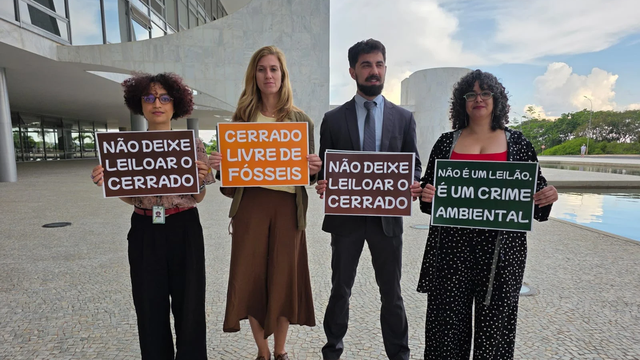
The Cerrado Is Not for Sale
Explore the upcoming gas auction in Brazil and its implications for Indigenous lands and the environment in Maranhão.
Keeping Safe from Fires and Liars
Explore the connection between climate crises and disinformation as experts discuss current challenges and their impacts.
UNGA: A week that laid bare the world’s fault lines, climate crisis all over it
From war to the accelerating climate crisis, this year’s UN General Assembly felt less like a tour through the fault lines shaping the world.
