
There are several ways to start a year on the wrong foot, and the government of the United States has just shown the world another one. On January 3, 2026, the US launched military strikes against Venezuela, captured president Nicolás Maduro, and declared it would take control of Venezuela’s vast oil reserves, opening the door for US oil companies to enter and rebuild the industry. This move comes just as the world is meant to be turning a corner – making 2026 the year to begin abandoning fossil fuels and charting a safer, more stable energy future.
Venezuela holds more oil than any other country in the world. The timing and emphasis on seizing control of the largest proven oil reserves on the planet make it clear that oil is central to this conflict, not just a side issue. This is the brutal continuity of fossil fuel politics: for decades, control over fossil resources has warped foreign policy, justified military interventions and wars, all while being dressed up as “security” or “economic necessity.”
Data from World Population Review

As the climate crisis deepens, clinging to oil only multiplies the risks of locking us into a world of violence, volatility and authoritarian bargains. A safer future is not an abstract ideal, it is a political choice. Every investment in clean energy is an investment in peace, stability and self-determination.
As the new year begins, the question is stark: do we keep repeating the old, deadly patterns of oil-driven power, or finally choose an energy system that no longer demands war to sustain it?
This is not only about Venezuela, it is about all of us
This is not only about the people of Venezuela – although their lives, safety, and right to self-determination matter deeply. This is about the whole world. It is about what kind of energy future we choose, and who pays the price when powerful countries refuse to let go of fossil fuels – because the climate crisis does not stop at borders.
If we burn the estimated 303 billion barrels of crude oil in Venezuela’s reserves, it’s the whole planet who will pay the price – including those very American citizens the US government is now claiming to benefit. This Thursday will mark one year since the wildfires that tore through Los Angeles, destroying neighborhoods, forcing families to flee, and turning entire communities into ashes. Those fires were not an accident: every new oil field, every decision to expand drilling, adds more fuel to a crisis that is already harming millions of people who had no say in creating it.
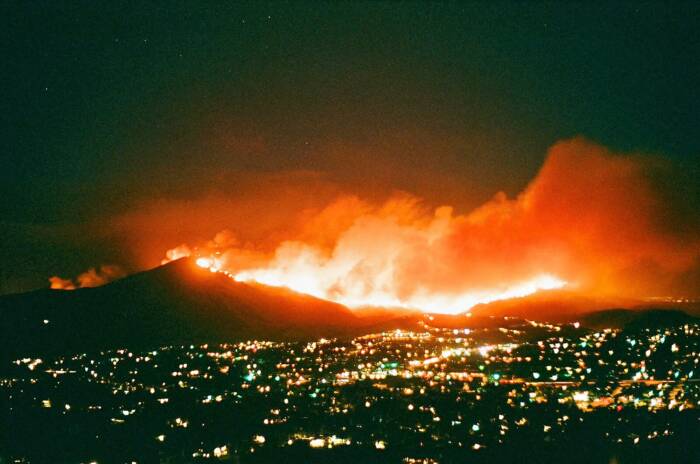
Massive wildfires displaced 100,000 people in Los Angeles area in 2025. Photo: David S. Roberts
Fossil fuels keep the world in crisis mode
The US decision to attack and seize control of Venezuela’s oil underscores just how far we remain from breaking the chains of oil dependency. Coal, oil and gas do not only heat the planet. They shape global politics in dangerous ways. Because fossil fuel reserves are concentrated in a few regions, they turn entire countries into permanent pressure points. Control over oil becomes control over power – and that power is defended with threats, sanctions, and sometimes bombs.
As long as fossil fuels remain the backbone of the global economy, conflict will always follow energy. Instability is not an accident in this system. It is built in. This is exactly what the climate movement has been warning about for decades: fossil fuels are not just a climate problem. They are a peace problem. A justice problem. A democracy problem.
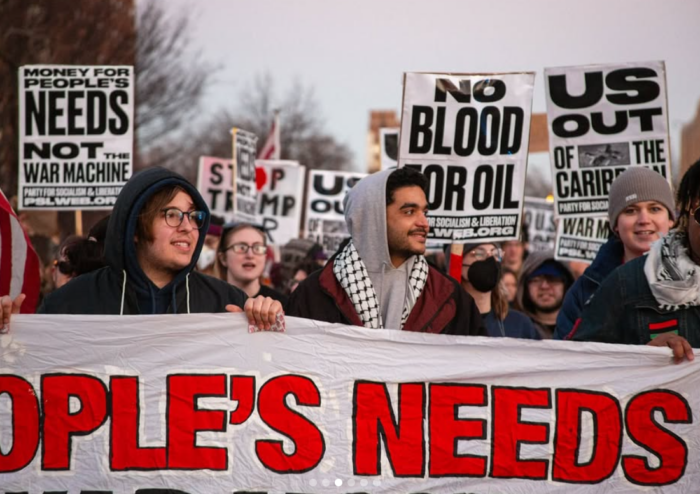
During the weekend, people protested against the attacks on Venezuela in 100+ cities across the US. Photo: PSL
Phase-out is not optional, it is urgent
2026 is supposed to be the year when governments finally started turning their fossil fuel promises into real action – and that is still possible. After years of warnings from scientists, after record heatwaves, floods, fires, and droughts, the direction is clear: phase out coal, oil, and gas, and move fast toward clean, renewable energy.
During the last UN climate conference in November 2025, more than 80 countries supported a roadmap to phase out fossil fuel use. That commitment was not symbolic. It was a recognition that continuing to depend on oil and gas locks the world into a future of climate disasters, political chaos, and rising conflict.
The final COP30 text failed to include any reference to fossil fuels, and the governments of Colombia and the Netherlands stepped forward to demonstrate much-needed leadership by announcing the first International Conference on the Just Transition Away from Fossil Fuels. The landmark convening will take place on 28 – 29 April 2026 in Santa Marta, Colombia – and it’s a great opportunity for our leaders to make real and actionable commitments to stop oil and the (climate, political, humanitarian) chaos it seeds once and for all.
Clean energy is not just cleaner, it is safer. Solar panels do not start wars. Wind turbines do not require military protection. Community-owned renewables do not destabilize entire regions. Every delay in phasing out fossil fuels makes crises like this more likely.
The climate crisis demands a global pivot away from fossil fuels – not new wars fought over them. 2026 needs to be a moment when the world shifts gear toward abandoning fossil fuels and investing in a safer, cleaner future. Let’s put this on the right foot. Let’s make it happen.