
Streets around the world looked different this past week. A powerful, red banner of resistance stretched across countries and continents: from city squares to village roads, from coastlines to rivers. Click on the photo below to relive the moment.
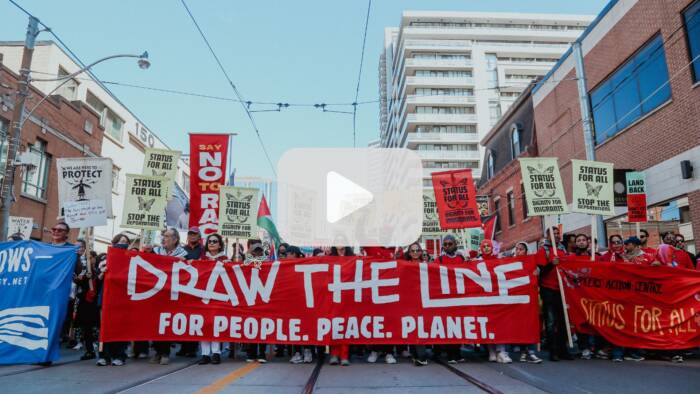
Toronto, Canada. Photo Credit: Sarah Hassanein
Over one hundred thousand of us rose up in more than 85 countries and 600 places to Draw the Line against inequality, greed, destruction, climate and social injustice. We built built momentum day by day during the week, culminating in a surge of collective action from 19 to 21 September.
Why we rose up
We are living through climate and social chaos. Fires, floods, and heatwaves are intensifying. Food and energy bills soar, while billionaires and fossil fuel executives grow richer from the destruction of our planet. And we’ve had enough.
So together with unions, youth, farmers, grassroots groups, artists, workers, frontline defenders, and other communities, we Drew the Line for peace, justice, clean energy, and a future where every community can thrive.
What people power looks like
We turned public spaces into sites of peaceful defiance, art, and community care. Marching, singing, dancing, weaving, painting, drumming; we rejected the status quo together. Each action carried a spark of resistance and a vision of the world we want. The breadth and energy of events is impossible to put into words, but here are a few highlights:
Asia
From Indonesia and the Philippines to Japan, South Korea, Taiwan, Bangladesh, and beyond, thousands mobilized in 58 cities across 12 countries asking governments and institutions to fund the future, not the ongoing climate crisis. In Jakarta, young people in anime and traditional dress pressed the President to deliver bold climate goals. Fisherfolk in the Philippines and Bangladesh called for the protection of waters, livelihoods and marine ecosystems. In Tokyo, a blazing red banner proclaimed Don’t Burn Our Life, echoing solidarity with Palestinian and other communities impacted by Japan’s fossil fuel finance.
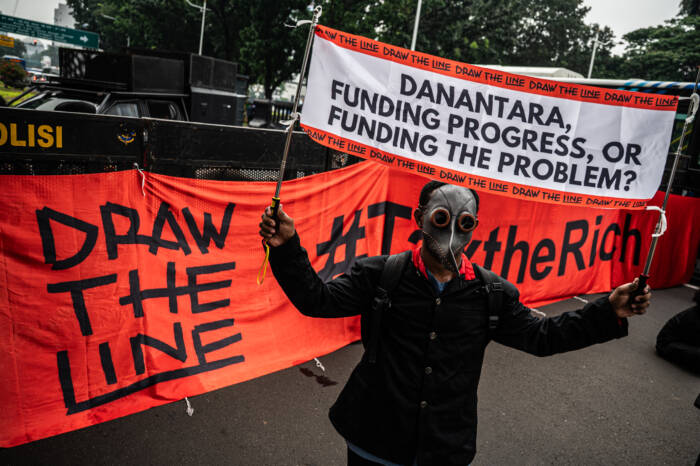
Jakarta, Indonesia. Photo Credit: Aprillio Akbar
Africa
In over a 100 actions, communities across Africa drew the line against fossil fuel colonialism. In Johannesburg, marchers went to the mayor’s office demanding a just transition, while in Nairobi, over 2,000 people transformed the streets into a carnival of music, dance, and color. Benin saw striking murals came to life, while marches in Ghana, Senegal, and the Democratic Republic of Congo connected energy injustice to everyday struggles with food, housing and healthcare, calling for socially owned renewable energy to deliver dignity, jobs and democracy. The continent echoed with a clear message: Africans are ready to reclaim power from fossil fuel corporations and lead the way toward a clean, just and people-centred future.

Johannesburg, South Africa. Photo Credit: Ihsaan Haffejee
Europe & Türkiye
Tens of thousands poured into Europe’s streets, uniting climate justice with economic fairness. In London, unions rallied with migrant justice groups and climate activists in one of the country’s largest demonstrations in years urging the government to tax the rich, fund climate solutions, protect workers, and hold polluters accountable. Berlin’s creative march spread nationwide, with more than 60 linked actions and a “Tax the Rich” cry calling on billionaires and the fossil fuel executives to pay their fair share. In France, preparations are building for a carnival-style protest in Paris on 28 September under the call: They destroy, we unite. Meanwhile in Istanbul, communities unfurled vivid banners, calling for the urgent protection of life-supporting forests and olive groves from mining projects.
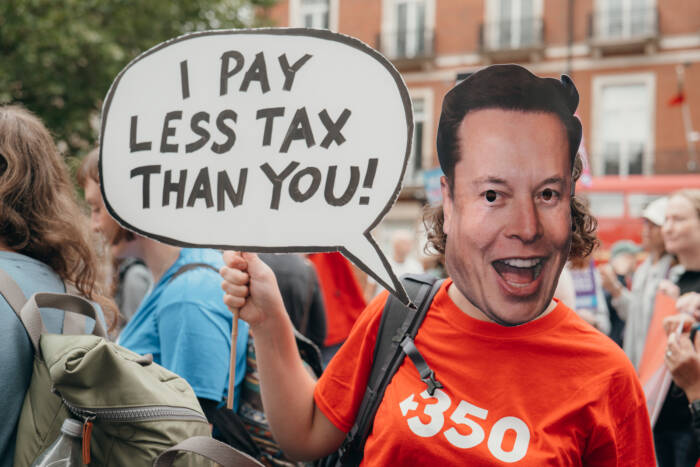
London, United Kingdom. Photo Credit: Leoni Fretwell / 350.org
The Pacific
From Suva to Samoa, Majuro to Melbourne, where survival is the name of the game, Pacific islanders and diaspora drew a clear boundary at 1.5°C, the critical climate target to avoid the worst impacts of the climate crisis. On shorelines and in city centers, people chanted We are not drowning, we are fighting, weaving mats, staging cultural performances, and carrying the stories of loss and resilience. In Fiji, mats embodied both grief and hope, while in Aotearoa, elders and youth wove together a living line of care. Across the region, the call rang out: polluters cannot move the goalposts, our survival is non-negotiable.
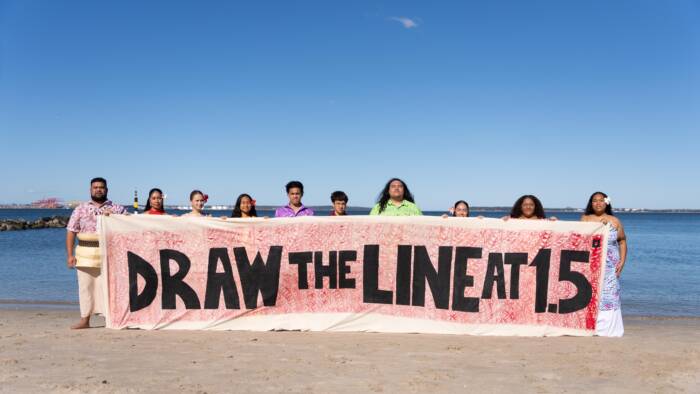
Sydney, Australia. Photo Credit: Mark Chen
US & Canada
People rose up in over 160 events across the US to confront the billionaires and governments profiting from war and genocide, and undermining democracy. In New York, the Make Billionaires Pay march saw 25,000 people surging through the financial district, past towers of wealth with a 160-foot “Climate Polluters Bill” exposing the trillions in damages caused by Big Oil. Across Canada, more than 70 demonstrations turned streets red with banners demanding an end to colonial violence, cuts to public services, and the exploitation of workers and migrants, calling instead for Indigenous rights, affordable housing, and real climate justice. Watch the video here.

New York City, United States. Photo Credit: Stephanie Keith
Latin America & the Caribbean
Across Latin America, frontline and Indigenous voices took center stage declaring that the energy future must be built with us, not against us. In the Brazilian Amazon, fishing communities formed a striking canoe line declaring Amazônia Sem Petróleo (no oil in the Amazon) in opposition to fossil fuel giants. In Valledupar, Colombia, people marched through former mining corridors, rejecting coal and lifting up Indigenous rights. From Puerto Rico to Trinidad, cultural gatherings and assemblies echoed that same commitment: the future is rooted in people power enabled by clean energy, not corporate greed and fossil fuel destruction.
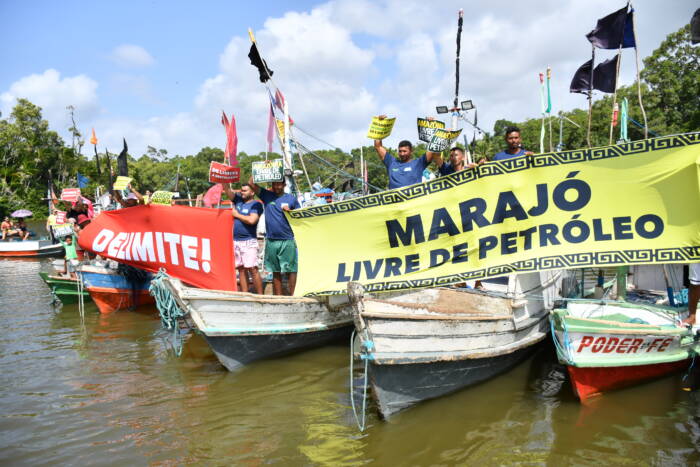
Marajo, Brazil. Photo Credit: João Paulo Guimarães
What happens next?
In just a few weeks, world leaders will arrive in Belém, Brazil, for COP30: the international climate talks that will shape the future of the planet.
As they step into those halls, the world has already spoken. From city to city, our demands took many forms and spoke to many causes but they were bound together by a shared truth.The solutions lie in:
- Making the ultra-rich pay their fair share,
- investing in real climate solutions,
- including Indigenous and grassroots leadership,
- and bringing the fossil fuel era to an end.
The time to put people and the planet above profiteers is now.
This was more than a weekend of protest. It was a promise and a new beginning. The line we just drew will only keep growing.